Monday, February 14, 2022

Announcing the #KidsLoveNonfiction Campaign

By Melissa Stewart


This morning, Mary Ann Cappiello, Professor of Language and Literacy at Lesley University, and Xenia Hadjioannou, Associate Professor of Language and Literacy Education at the Harrisburg campus of Penn State Universitysent the letter below to The New York Times requesting that the paper add three children's nonfiction bestseller lists to parallel the existing picture book, middle grade, and young adult lists, which focus on fiction.

This change will align the children's lists with the adult bestseller lists, which separate nonfiction and fiction. It will also acknowledge the incredible vibrancy of children's nonfiction available today and support the substantial body of research showing that many children prefer nonfiction and still others enjoy fiction and nonfiction equally.

If you support this request, please follow the signature collection form link to add your name and affiliation to the more than 200 educators and librarians who have already endorsed the effort. Your information will be added to the letter but your email address will remain private.

LETTER TO THE NEW YORK TIMES

Nonfiction books for young people are in a golden age of creativity, information-sharing, and reader-appeal. But the genre suffers from an image problem and an awareness problem. The New York Times can play a role in changing that by adding a set of Nonfiction Best Seller lists for young people: one for picture books, one for middle grade literature, and one for young adult literature.  

Today’s nonfiction authors and illustrators are depicting marginalized and minority communities throughout history and in our current moment. They are sharing scientific phenomena and cutting-edge discoveries. They are bearing witness to how art forms shift and transform, and illuminating historical documents and artifacts long ignored. Some of these book creators are themselves scientists or historians, journalists or jurists, athletes or artists, models of active learning and agency for young people passionate about specific topics and subject areas. Today’s nonfiction continues to push boundaries in form and function. These innovative titles engage, inform, and inspire readers from birth to high school.  

Babies delight in board books that offer them photographs of other babies’ faces. Toddlers and preschoolers fascinated by the world around them pore over books about insects, animals, and the seasons. Children, tweens, and teens are hungry for titles about real people that look like them and share their religion, cultural background, or geographical location, and they devour books about people living different lives at different times and in different places. Info-loving kids are captivated by fact books and field guides that fuel their passions. Young tinkerers, inventors, and creators seek out how-to books that guide them in making meals, building models, knitting garments, and more. Numerous studies have described such readers and their passionate interest in nonfiction (Jobe & Dayton-Sakari, 2002; Moss and Hendershot, 2002; Mohr, 2006). Young people are naturally curious about their world. When they are allowed to follow their passions and explore what interests them, it bolsters their overall wellbeing. And the more young people read, the more they grow as readers, writers, and critical thinkers (Allington & McGill-Franzen, 2021; Van Bergen et al., 2021).

Research provides clear evidence that many children prefer nonfiction for their independent reading, and many more select it to pursue information about their particular interests (Doiron, 2003; Repaskey et al., 2017; Robertson & Reese, 2017; Kotaman & Tekin, 2017). Creative and engaging nonfiction titles can also enhance and support science, social studies, and language arts curricula. And yet, all too often, children, parents, and teachers do not know about recently published nonfiction books. Bookstores generally have only a few shelves devoted to the genre. And classroom and school library book collections remain dominated by fiction. If families, caregivers, and educators were aware of the high-quality nonfiction that is published for children every year, the reading lives of children and their educational experiences could be significantly enriched.

How can The New York Times help resolve the gap between readers’ yearning for engaging nonfiction, on the one hand, and their lack of knowledge of its existence, on the other? By maintaining separate fiction and nonfiction best seller lists for young readers just as the Book Review does for adults.

The New York Times Best Sellers lists constitute a vital cultural touchstone, capturing the interests of readers and trends in the publishing world. Since their debut in October of 1931, these lists have evolved to reflect changing trends in publishing and to better inform the public about readers’ habits. We value the addition of the multi-format Children’s Best Seller list in July 2000 and subsequent lists organized by format in October 2004. Though the primary purpose of these lists is to inform, they undeniably play an important role in shaping what publishers publish and what children read.

Adding children’s nonfiction best-seller lists would:

·       Help family members, caregivers, and educators identify worthy nonfiction titles.

·       Provide a resource for bibliophiles—including book-loving children—of materials that satisfy their curiosity.

·       Influence publishers’ decision-making.

·       Inform the public about innovative ways to convey information and ideas through words and images.

·       Inspire schools and public libraries to showcase nonfiction, broadening its appeal and deepening respect for truth.

We, the undersigned, strongly believe that by adding a set of nonfiction best-seller lists for young people, The New York Times can help ensure that more children, tweens, and teens have access to books they love. Thank you for considering our request.

Dr. Mary Ann Cappiello 

Professor, Language and Literacy

Graduate School of Education, Lesley University

Cambridge, Massachusetts 

Former Chair, National Council of Teachers of English (NCTE) Orbis Pictus Award for Outstanding Nonfiction Committee 


Dr. Xenia Hadjioannou

Associate Professor, Language and Literacy Education

Penn State University, Harrisburg Campus

Harrisburg, PA

Vice President of the Children’s Literature Assembly (CLA) of the National Council of Teachers of English (NCTE). 


References

Allington, R. L., & McGill-Franzen, A. M. (2021). Reading volume and reading achievement: A review of recent research. Reading Research Quarterly, 56(S1), S231–S238. https://doi.org/10.1002/rrq.404

Correia, M. (2011). Fiction vs. informational texts: Which will your kindergarteners choose? Young Children, 66(6), 100-104.

Doiron, R. (2003). Boy Books, Girl Books: Should We Re-organize our School Library Collections? Teacher Librarian, 14-16.

Kotaman H. & Tekin A.K. (2017). Informational and fictional books: young children's book preferences and teachers' perspectives. Early Child Development and Care, 187(3-4), 600-614, DOI: 10.1080/03004430.2016.1236092

Jobe, R., & Dayton-Sakari, M. (2002). Infokids: How to use nonfiction to turn reluctant readers into enthusiastic learners. Markham, Ontario, Canada: Pembroke.

Mohr, K. A. J. (2006). Children’s choices for recreational reading: A three-part investigation of selection preferences, rationales, and processes. Journal of Literacy Research, 38(1), 81–104. https://doi.org/10.1207/s15548430jlr3801_4

Moss, B. &  Hendershot, J. (2002). Exploring sixth graders' selection of nonfiction trade books: when students are given the opportunity to select nonfiction books, motivation for reading improves. The Reading Teacher, vol. 56 (1), 6+.

Repaskey, L., Schumm, J. & Johnson, J. (2017). First and fourth grade boys’ and girls’ preferences for and perceptions about narrative and expository text. Reading Psychology, 38, 808-847.

Robertson, Sarah-Jane L. & Reese, Elaine. (Mar 2017). The very hungry caterpillar turned into a butterfly: Children's and parents' enjoyment of different book genres. Journal of Early Childhood Literacy, 17(1), 3-25.

Van Bergen, E., Vasalampi, K., &
Torppa, M. (2021). How are practice and performance related? Development of reading from age 5 to 15. Reading Research Quarterly, 56(3), 415–434.
https://doi.org/10.1002/rrq.309

If you support the request to add three children's nonfiction bestseller lists to parallel the existing lists, which focus on fiction, please add your name and affiliation to the signature collection form


Sunday, February 13, 2022

Story + Shape: From Idea to NF Board Books

 By Sue Lowell Gallion


As nonfiction enthusiasts, we share a passion to introduce children to nature, starting with the very youngest. There is nothing like walking outdoors with a baby on your hip, giving her the opportunity to touch smooth leaves, rough bark, or the layers of a pinecone as you talk about the amazing world around us.

Books, particularly board books, offer a tactile experience to young readers as well. The size, shape, and other physical features of the book communicate along with the text and illustrations. Today’s board books offer many novelty elements that can enhance nonfiction subjects for the youngest child. In addition to the sturdy, chewable (and safety tested) cardboard pages of a board book, consider the shape of the book and other physical elements as creative tools available to you.

For example, Peek-a-Baby Ocean by Mike Orodan (Chronicle, 2019) uses wave-shaped pages to introduce marine creatures in their habitats and lift-the-flaps to reveal the matching babies.

There’s one spread for each creature, with a line of nonfiction text for the parent and one for the baby. The combination of shape, design, illustrations, and text along with the peek-a-boo activity makes this a marvelous nonfiction concept board book. Peek-a-Baby Farm FARM is a companion title. Keep in mind that series potential is an important factor in selling board book ideas.

Nonfiction board books can appeal to a wide range of ages, with layers of information for younger and older readers. Bug Hotel by Libby Walden, illustrated by Clover Robin (Caterpillar/Little Tiger, 2018) is shaped like a house, with each spread dedicated to one insect.

The beetle spread features stag, wasp, and green dock beetles, with more facts about where to find beetles and the importance of old wood for wood-eaters under lift-the-flaps. The book concludes with directions on how to make a garden more bug-friendly by providing materials insects can use to make homes.

When my first grandchild arrived, I became more interested in (obsessed with?) board books. I knew many board books are created by author/illustrators or in-house. But I made a point of attending a workshop on novelty board books for authors and author-illustrators by Ariel Richardson, editor at Chronicle Books, at an SCBWI-Kansas/Missouri conference several years ago.

Ariel encouraged attendees to brainstorm how the physical shape of a book could enhance a story or a subject. The one requirement was that the book must have a spine, so it could be shelved. She suggested we also explore novelty elements, such as die cuts, different textures for surfaces such as scratchy or mirrored, and lift-the-flaps. These suggestions could be included as illustration options in a board book manuscript.

The final exercise was to take paper, stapler, and scissors and brainstorm with book dummies (See the Action Item below!) As I snipped, I wondered if a board book about the world might take the shape of a globe. And in 2020, Our World: A First Book of Geography, illustrated by Lisk Feng, was released by Phaidon Press.


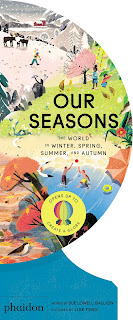
This large board book opens to create a freestanding globe with magnetic closures on the front and back covers. A companion globe-shaped book, Our Seasons: The World in Winter, Spring, Summer, and Autumn, also illustrated by Lisk Feng, releases April 20, 2022, and there may be more to come in the series!

The globe-shaped books combine poetry and prose, with a short rhyming text and secondary prose text, similar to the structure of many nonfiction picture books. This technique is also used effectively in many nonfiction board books, whether within the spreads or as back matter. Susannah Buhrman-Deaver’s post, “Tell a Science Story Two Ways: Prose and Verse”, in NF Fest 2020, explores this topic further.

In addition, many of these books will grow with a child, with extra details in layers of text, illustrations, and physical aspects of the book that will become meaningful to the child as he enters different stages of development.

Finally, as a geography lover, I have to share Chihiro Takeuchi’s Paper Peek Animals  (Candlewick Studio, 2020).

This square novelty board book introduces the continents, animals that are native to each continent, and the world map. It also includes counting and seek and find elements. Die cut windows in the shape of animals emphasize the seek and find activity. And there’s a companion board book, Paper Peek Colors.

Board books aren’t constrained to the typical 32-page format of a picture book, so they can have any number of spreads, including an odd number. They can range from as few as six spreads to 15 or more. The best way to study them is to go to your bookstore and library and browse. Look at how the shelves are organized and how the books are displayed. Then study individual titles that interest you. Search publishers’ online catalogs using a filter for board books. Consider how your ideas might add something new and different. Your suggestions for physical shape, design, or novelty elements along with your text just may intrigue an editor in this growing segment of the children’s book market.


Give it a Try

Go to a bookstore or library to research current nonfiction board books. Look for nonfiction board book series or stand-alone titles in different shapes or with novelty elements. How does the shape or the novelty elements add to the experience of the book? Now, list topics that fascinate you that might work as a board book. Later, do your own brainstorming of book shape and possible novelty elements. Make several blank dummies, then look at your list of possible topics. Start cutting and see where your scissors and your creativity lead you!


Meet the Author


Sue’s first nonfiction book, Our World, was a Parents Magazine Best of 2020 and included in The Washington Post 2020 holiday gift guide. She’s the author of the award-winning Pug and Pig series (Pug Meets Pig, Pug & Pig Trick-or-Treat, Pug & Pig and Friends) illustrated by Joyce Wan (Beach Lane Books/S&S), and others. Sue lives in the Kansas City area with her black lab mix, Tucker, and is lucky to have her grandchildren nearby for book research and other fun. She loves coffee and traveling. Visit her at suegallion.com, @SueLGallion on Twitter, or suelowellgallion on Instagram.


Saturday, February 12, 2022

When Is It Time To Quit?

by Anita Sanchez


Whenever someone asks me how many books I’ve written, I reply proudly, “Dozens!” They’re suitably impressed. And it’s quite true—I’ve written dozens of picture books, poems, stories, and seven full-length novels.

But if they inquire how many books I’ve published, the answer would be quite different. Most of the books I’ve written are unpublished, and probably always will be.

Henry David Thoreau wrote literally millions of words, most of them unpublished in his lifetime. But he never stopped writing. “It is wise to write on many subjects,” he said. “You must try a thousand themes before you find the right one, as nature makes a thousand acorns to make one oak.” Thoreau was not only an author, but a passionate and wise botanist. He knew that the plant which produces only one seed is at risk of extinction, but the plant that produces many has a better chance of survival.

But here’s the terrible question, the one I’ve wrestled with again and again—when to quit a manuscript and move to the next one?

Sometimes there’s a flaw so fatal that the whole project stops in midsentence. I once wrote a biography of a nineteenth-century biologist who studied the weird reptiles known as Gila monsters. He had an uproarious, adventure-filled life, and seemed a perfect subject until my research led me to the unescapable fact that he was an extreme racist. I fell out of love with him, although not with Gila monsters--I wrote about them instead.

But sometimes it’s harder to know when to pull the plug. There’s no one right answer, no magic formula. A clue can be when several people whose judgment you respect point out the same things again and again. (Don’t take one person’s word as gospel, though—always get a second opinion, and a third, and a fourth…) Perhaps when the writing of it feels like drudgery instead of nourishment. Perhaps when the pile of rejections threatens to sap your courage to the breaking point. And perhaps it’s when a new idea is thrusting against the husk of your brain and can’t wait to germinate.

It’s said that the Greek philosopher Plato found his first literary work was not up to his mentor’s standards, and so he threw the scroll into the fire. I could never do that—lose it all forever. But sometimes there does come a moment to click SAVE on the laptop. Once, we authors crammed unpublished manuscripts in dusty drawers, saved them on floppy disks, or consigned them to the dark recesses of cyberspace. But these days, I’m uploading my files to the cloud. I like the idea of my unpublished books floating through the ether, like dandelion seeds on the breeze, drifting off to future possibilities.

Does abandoning a manuscript mean your beloved book will never see the light of day? Far from it. There are always options. After experimenting with new material, I often come back to older work. I might self-publish a nonfiction book on an odd topic and hope to find a niche audience. I could recycle a story into a blog post. I might read a rhyming picture book to my granddaughter as she sits on my lap, a delightful secret between the two of us.

Or someday I might resurrect a book, tweak it just right, and have a triumphant bestseller. You never know which acorn will be the one to touch the sky.


Give It a Try

One of the things I do when I’m stuck as to what to work on next, is to get my ideas off the computer and onto paper. I take brightly-colored index cards (remember them?) and write each possible idea on a card. Any idea, no matter how crazy.

Then I deal them out on a tabletop or the floor, and play with putting them in order. I arrange them in order of originality, and then in order of marketability, and then which ones would be the most fun to research. Then I line them up in order of easiest, hardest, or most controversial. After a while, one title keeps popping up towards the top of the row again and again. Seeing the possibilities spread in front of me helps me choose which one to put my energy and enthusiasm into next.


Meet the Author

Anita Sanchez is especially fascinated by plants and animals that no one loves, and the unusual, often ignored wild places of the world. Her books sing the praises of the unappreciated: dandelions, poison ivy, tarantulas, mud puddles, deserts. Her weirdest book is Itch: Everything You Didn’t Want to Know About What Makes You Scratch.

A picture book about animals that love mud, Hello, Puddle! is due out in March 2022 from Clarion Books. In fall look for Meltdown: Why Glaciers Are Melting And What We Can Do About It.


Friday, February 11, 2022

What’s Your Angle? Finding Your Focus from your Reams of Research

By Sarah Albee


I like to bake, and over the holidays I brought a cake to a friend’s dinner party. The recipe called for double boilers and candy thermometers and balloon whisking, and I put some effort into piping the icing into swirls and adding Christmas-y decorations.

When the dinner guests complimented my cake, I gave a nonchalant shrug and said it was a very simple recipe, really.

“But look at the swirly icing!” they said.

“Child’s play,” I responded.

I wasn’t being truthful. Had they glimpsed my kitchen earlier that day, they’d have seen a disheveled me, with bowls piled in the sink, flour on the floor, and sprinkles stuck to the cat.

Writing a book can be like that, too. We all hope our finished product will look effortless and amazing, but the process of getting there can be . . . messy.

So how do we navigate through the reams of research and find our book’s focus? Let’s start with an activity.

Have a look at a recent nonfiction book that you admire. What is it that appeals to you? Perhaps it’s an ingenious, why-didn’t-I-think-of-that? topic. Maybe you like the way the topic is presented--the design, the writing, the illustrations. Perhaps the book is so well-structured or tightly-plotted it seems as though it sprang practically fully-formed from the writer’s pen, as though she saw the path she needed to take with her research and her writing and strode through it, with no missteps or wrong turns.

That’s the way a great book should look to its readers. But I am willing to bet that the writer of that book may have dropped a few sprinkles on the cat during her research and writing process.

I wish I could share a tried-and-true recipe that works every time for every book, but now that I’ve told you the cake story, you’d know I wasn’t being truthful. Every writer’s process is different, and every topic requires unique considerations. But I can share some of what I have learned after many—cough!— years of writing nonfiction books.

Once I’ve got my topic, I’ve learned to ask myself three questions:

  1. Why does this topic interest me?
  2. How can I present it in a way that a kid will care?
  3. What underlying message do I most want to share with my readers?

I start my research in a fairly generalized, big-picture way. I read widely, immersing myself in my topic, always on the lookout for kid-friendly angles.

Once I feel somewhat confident about the broad strokes of my topic, I home in on my approach. How can I make my book different from other books out there? How can I make it relevant to a kid’s interests? What sort of structure makes sense for the topic? (For everything you need to know about text structure, visit Melissa Stewart’s website!)

Even when I have a good idea and a reasonable sense of the structure, question #3, the underlying message, usually doesn’t crystalize for me until I’ve done a lot more research and am well into the writing process. I use trial and error and write draft after draft after draft before the core message, the mission statement, the heart of the book (pick your metaphor) emerges from the gloaming.

When I finally nail my book’s mission statement, I tack it up over my desk and look at it frequently. At this stage I often need to go back to the research process, but because I now have a focus, the research tends to feel more streamlined and to go more smoothly. When I find a cool nugget of information, I ask myself these questions:

  • Is this fact relevant to the book’s mission statement?
  • Is it interesting to kids?
  • Do I have room for it?

Because the process for my book Accidental Archaeologists went uncharacteristically smoothly, I’ll use it as an example. I got the idea while researching a different book. I stumbled across a 1978 newspaper article about a construction worker digging beneath the streets in Mexico City. His shovel accidentally clanged a stone, which turned out to be the undiscovered ruins of an Aztec temple. In a flash, I knew I wanted to write an entire book about accidental archaeological discoveries by ordinary people that changed what we thought we knew about history.

The structure of that book also came fairly readily. I would arrange the discoveries chronologically. Each chapter would begin with a dramatic description of the discovery, followed by a look into the historical period of the artifact, and why that history is relevant to the reader.

So I had the topic and the framework—woot! But it took many, many drafts before I understood the book’s mission statement. Here’s what I came up with: Biases have long bedeviled the field of archaeology (and history), and those biases have shaped our perspectives of human history.

I never explicitly state my mission in the book. The reader doesn’t need to know it, but I most certainly do. 

Here’s an exercise I do at school visits (remember those?) to help kids structure their personal narrative or biography.

I read my biography of George Washington to them  and walk them through my research process.

  • I give examples of some of the cool facts I uncovered. I explain how I weighed each fact and decided whether or not it deserved a space in the very limited real estate that I had for my book.
  • I explain that of course I needed to include the basics—where and when George was born, how he commanded the American forces in the Revolutionary War, how he became the first President, and when he died. But then there were the other facts—the more personal, interesting, kid-friendly ones. They’re the stuff that makes the book unique and interesting. Which ones fit, and how many could I include?
  • Next I call up volunteers. I hand each kid one of the fact cards we’ve just discussed. I line up my volunteers, in no special order, with the fact cards around their necks.


Then I present the book to my audience. As I read the text, I shuffle around my human note cards so they stand in the order that I’ve used them.


I point things out:

  • “Did you notice that I did not start my biography with the day George was born? Yes, that fact is in the book, but I don’t open with it. You know why? Because babies aren’t very interesting, except to their moms and dads.
  • “Did you notice how I did start my biography?” (It starts mid-stream with something George did after the American Revolution was over, and supports my mission statement for the book.) I talk about why I decided to begin the story there.

I explain that every writer in the room could have written a different book on the same subject, based on the same body of research.


Give it a Try

Have a look at your work-in-progress. Maybe you’re just at the idea phase. Maybe you’re deep into the research stage. Or maybe you’ve completed a first draft. Ask yourself these three questions. (Try to think beyond “because it’s cool!” and answer as thoughtfully as you’re able.)

  1. Why does this topic interest me?
  2. How can I present it in a way that a kid will care?
  3. What underlying message do I most want to share with my readers?

Piece of cake, right?


Meet the Author 

Sarah Albee is the New York Times bestselling author of nonfiction books for kids. Her next title will be out October, 2022, and is called Troublemakers in Trousers: Women and What They Wore to Get Things Done. Other recent titles include Fairy Tale Science; Accidental Archaeologists; North America: A Foldout Graphic History; Dog Days of History; POISON: Deadly Deeds, Perilous Professions, and Murderous Medicines; and George Washington: The First President.  She lives in Connecticut with her family. Visit her at www.sarahalbeebooks.com


Thursday, February 10, 2022

Writing Nonfiction Emergent Readers

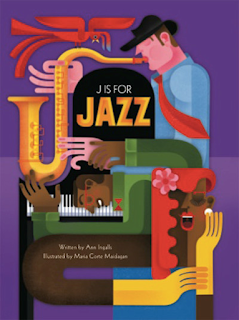
 By Ann Ingalls


The first word I ever read and made sense of was the word come. I sat alone at my parents’ dining room table and held my book. It occurred to me that C  made a hard sound. M made a soothing sound. That was enough information to read the word. I was gob-smacked! A new world of reading had opened up to me!

If you want to write emergent readers, that’s the kind of child for whom you’ll write.

Your prospective audience is not yet reading but they are beginning to find connections between letter sounds (mostly consonants) and words. They begin to recognize words even though they can’t read an entire sentence. Connections between letters and words and spoken and written words happen over time and with experience.

Emergent readers are designed for children who may be reading alone. A teacher or parent might read a book to children before allowing them to study it independently. Children remember that first read and can guess at a few unfamiliar words.

How will you do it?

Don’t be fooled. Writing an emergent reader is harder than it looks. Before you begin, read as many of them as you can. Study them. Analyze them. I bought a bunch at a thrift store and on Amazon and deconstructed them. I highlighted high interest words, narration, and dialogue with different colored markers. This helped a lot. Study word lists (Here’s one for grades K-3):                         https://www.k12reader.com/subject/vocabulary/fry-words 

Imagine you are telling your story to a young child. Keep the language simple. Think of words kindergarteners and first graders know. A few complex words can be added but limit that to about 8-10 per 100-word manuscript. You can repeat these words throughout the text. Don’t count them a second time. When I wrote Ice Cream Soup, the most difficult words were “soup” and “goop”, words clearly not on kindergarten and first grade word lists.

For a Level One reader, sit down and write the very best 60-100 word story you can. Make sure your story has a simple story arc and a clear beginning, middle and end. Nonfiction leveled readers can be circular. For example: a seed to a tree and back to seeds. Level One readers sell best. Publishers receive fewer of these. Each publisher has a slightly different idea of what these will look like. Study publishers’ websites often to get the best idea of exactly what they like.

Grab your reader’s attention with the first line or two.  Do it with language that is familiar and interesting. Choose a topic has universal appeal to children. Would children rather read about cultivating lettuce or baboons?

For the very earliest readers, make suggestions in illustrator’s notes.  It isn’t typical to do this but when you are limited with text, that may be the only means you have of communicating what is happening. Most editors with whom I have worked agree with this.

Read your book out loud, over and over again. Run it by your critique group to see if they stumble over any parts or find that the text drags. Work it and rework it until it sings.

If you like to write in rhyme as I do, see who publishes that. Random House, Scholastic, and some Children's Press books are done in rhyme. For emergent readers, rhyme provides an auditory clue to the next word.

When you are finished, here are a few questions to ask yourself about your work:

  • Did the topic emerge early in the story?
  • Did I use realistic age-appropriate language?
  • Did I use simple sentences?
  • Is my story character-based? This type of story appeals to very young children. For instance, a child can explain step by step how to make a potato battery.
  • Did I use present tense, active verbs?
  • Does my story have a surprise twist or unusual ending that will please children and editors alike?

If you’ve done all of that, your story is likely ready for submission. I’ll look for it on the shelves at my favorite books stores and libraries.


Give it a Try

Check out three emergent readers from the library (many have these in a separate section). Or search “Emergent Readers” on Amazon. Use the Look Inside feature on Amazon to get an overview of several Emergent Readers. Ask yourself the questions above related to one of the titles.


Meet the Author
 
Ann Ingalls passes the day exaggerating (writing fiction) or telling the truth (writing nonfiction). She has written over sixty books for young readers. Her books have won several awards or distinctions:  Bank Street Books, Best Books of 2020, the 2015 Annual American Graphic Design Award, and the Ella Fitzgerald Foundation’s “A Book Just for Me!” Pencil: A Story with a Point! was on the SSYRA list and awards from the Highlights Foundation.

When given the choice between educating or entertaining children, Ann chooses to do both. Before she was a children’s writer, Ann taught elementary and special education classes. Visit her at http://anningalls.com.


Wednesday, February 9, 2022

Our Voices: Reading and Writing About Our Heritage

 by Paula Yoo


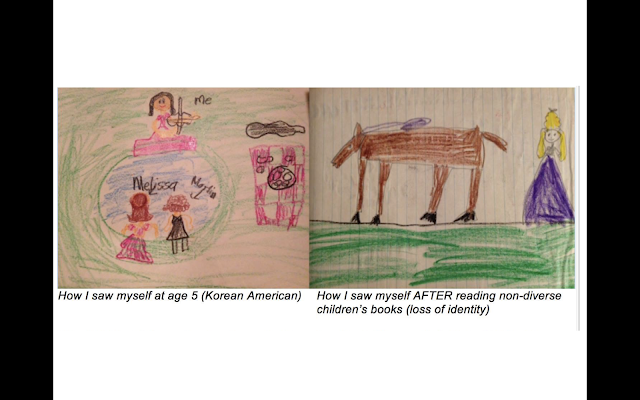
When I visited my parents’ house several years ago, I found a box filled with my old drawings from elementary school. I smiled at the cute images of myself in kindergarten, with my black hair and dark eyes.

But as I flipped through the pages, I noticed something was… off.

The drawings of me with black hair and dark eyes were soon replaced with blue eyes and blonde hair. 


I was holding a tangible piece of evidence as to why representation matters not just in books, but in our schools. Looking back, I realized how little—if any—Asian American Pacific Islander literature and history had been taught in depth when I was growing up. I didn’t know that 19th-century Chinese immigrant laborers helped construct the Continental Railroad. The illegal incarceration of the Japanese Americans during World War II was just a couple of pages, maybe even a side bar, in our US History textbooks. And as a Korean American, I learned more about the Korean War at the dinner table from my parents than I did in the classroom.

The irony? Many award-winning AAPI children’s/YA fiction and nonfiction books were published back then. But during the 1970s and ‘80s, AAPI subjects were not considered “mainstream” enough to be taught in-depth in K-12 classes. As a result, there was not enough access for these books. For example, when I was in elementary school in 1975, Laurence Yep’s Dragonwings won a Newbery Honor. But I never saw his books on our library shelves. I did not know about him, along with Yoshiko Uchida, Allen Say, Sook Nyul Choi, and others until I was an adult.

I felt cheated. I lost a valuable part of not just my childhood, but my identity.

And I had the drawings to prove it.

This lack of access has existed for decades and impacted how we understand Asian America in the present. In May 2021, according to a national survey conducted by the nonprofit Leading Asian Americans to Unite for Change, 42 percent of Americans could not name a single Asian American figure when asked. “Don’t know” was the No. 1 answer. The next 2 answers? “Bruce Lee” and “Jackie Chan,” thus affirming the stereotype of only associating Asians with martial arts.[1]

During college and beyond, I did my own homework on Asian America by devouring every single AAPI history book I could find. That inspired me to write AAPI nonfiction books for young readers. I did not want children growing up like me with this huge gap of in their education.

Because this gap can have devastating—and even fatal—results.  

Anti-Asian hate crimes have been skyrocketing since the start of the 2020 COVID-19 pandemic in the United States. As of September 2021, more than 10,000 pandemic-related incidents of anti-Asian physical and verbal harassment hate crimes, including several deaths, have been reported.[2]

The AAPI community fought back. Demonstration rallies swept the country. Prominent AAPI members of Congress banded together to create the COVID-19 Hate Crimes Act. President Joseph R. Biden, Jr. signed this into law on May 20, 2021. This date was especially significant to me, because it was two days after what would have been Vincent Chin’s 66th birthday.[3] Vincent Chin was the subject of my latest YA narrative nonfiction book, From a Whisper to a Rallying Cry: The Killing of Vincent Chin and the Trial that Galvanized the Asian American Movement (Norton Young Readers, 2021). My book is about the 1982 manslaughter death of a Chinese American man killed during a wave of anti-Asian racism influenced by mass layoffs in the auto industry due to competition from Japanese import cars. Chin’s case would become the first federal civil rights trial for an Asian American, and his name became a symbol for anti-Asian racism.

Soon after the 2021 COVID-19 Hate Crimes Act was passed, Illinois and New Jersey became the first two states to mandate Asian American Pacific Islander history in K-12 public schools. California recently passed a law requiring K-12 Ethnic Studies to be taught as well. New York and several other states are now working on similar legislation.

“The mandates in Illinois and New Jersey mean that all students, and especially Asian American students, will finally see Asian Americans as central rather than peripheral or invisible to our American story,” says Dr. Sarah Park Dahlen, PhD, Associate Professor, School of Information Sciences, University of Illinois at Urbana-Champaign.[4]

“Asian Americans and Pasifika or Pacific Islander peoples have a long history in the Americas which is often erased, making it seem like [we] just arrived here last week, month or year,” agrees Dr. Betina Hsieh, associate professor of Teacher Education at California State University Long Beach. She believes that teaching AAPI history and integrating nonfiction writing in K-12 classrooms “…helps us move away from the idea that Asian Americans are one interchangeable group that are all alike and fit neatly Into stereotypical boxes.”[5]

But mandates are just the first step, warns Dr. Jung Kim, Associate Professor of Literature at Lewis University. “It is important to ensure that an in-depth, nuanced history be taught to show the rich and diverse history of Asian Americans,” she says. “To that end, experts and educators must work together to help develop and disseminate curriculum that is sensitive and thoughtful.”[6] Kim and Hsieh, who co-authored The Racialized Experiences of Asian American (Routledge, 2021), found that many of the educators they interviewed had similar experiences to my own, not having access to Asian American representation in their K-12 schooling experiences and often feeling like they were cheated out of learning about a part of their identities and the histories of Asian Americans.

So, let’s now take a step back and look at the toxic and tangible results of what happens when AAPI history is NOT taught in our schools. What happens when we are erased? In September 2020, the Stop AAPI Hate Youth Campaign released a report in which 1 out of 4 AAPI youth reported experiencing anti-Asian physical and verbal harassment and bullying because of the pandemic.[7]

That statistic breaks my heart. Think about it. What if this whole time, AAPI history was already being taught in depth in all K-12 classrooms across the country? Instead of 1 out 4 AAPI children being bullied because of the pandemic, perhaps that number could have been… zero.


Give It a Try

I hope my personal story inspires you to look into your own heritage as a source of inspiration for discovering nonfiction stories told from unique points of view. What are little-known historical events or figures from your heritage that you feel are not only universal but relevant to what’s happening today? Because all of our voices are universal and empowering for those who have had to rise above the noise to be heard.


Meet the Author

Paula Yoo is a TV/feature writer and producer, musician and author of over a dozen children’s and young adult books. Her latest YA narrative nonfiction book, FROM A WHISPER TO A RALLYING CRY: THE KILLING OF VINCENT CHIN AND THE TRIAL THAT GALVANIZED THE ASIAN AMERICAN MOVEMENT (Norton Young Readers 2021), won the Boston Globe Horn Book Award, was longlisted for the National Book Award, and was a finalist for the YALSA Award for Excellence in Nonfiction.


[1] Wang, Claire, “Survey finds that 42 percent of people in U.S. can't name one Asian American,” NBC NEWS, May 13, 2021. doi: https://www.nbcnews.com/news/asian-america/survey-finds-42-percent-people-u-s-can-t-name-n1267283

[2] "Stop AAPI Hate National Report," Stop AAPI Hate, September 30, 2021. doi: https://stopaapihate.org/national-report-through-september-2021/

[3] Sprunt, Barbara, "Here's what the new hate crimes law aims to do as attacks on Asian Americans rise," NPR, May 20, 2021. doi: https://www.npr.org/2021/05/20/998599775/biden-to-sign-the-covid-19-hate-crimes-bill-as-anti-asian-american-attacks-rise

[4] Interview with author and Dr. Sarah Park Dahlen, February 1, 2021.

[5] Interview with author and Dr. Betina Hsieh, February 1, 2021.

[6] Interview with author and Dr. Jung Kim, February 1, 2021.

[7] Wang, Claire, "'You have Chinese virus!': 1 in 4 Asian American youth experience racist bullying, report says," NBC News, September 17, 2020. doi: https://www.nbcnews.com/news/asian-america/25-percent-asian-american-youths-racist-bullying-n1240380

Tuesday, February 8, 2022

Reimagining Your Nonfiction Idea in Graphic Format

 By Teresa Robeson


You may have heard that the graphic novel (GN) is a hot category that’s growing by leaps and bounds, and you want in on the action. Or, like me, you’ve always loved the format and now want to write it as well.

“But,” you might wonder, “I write nonfiction; can that work as a comic book?” 

The answer is a resounding yes because all genres can be rendered in graphic format. 


                                                    historical fiction in graphic format


Let me reassure you of a couple of things as you transform your nonfiction idea into comic form: 

1) It’s not difficult to get started.

Research as thoroughly as you would for any other format. I recommend you meticulously record images since your editor could ask you to provide a photo file for the illustrator, as I had to when writing Who Is Tibet's Exiled Leader?  Not to be confused with a graphic biography; my BGN has some made-up dialog.

After that, instead of writing your manuscript as prose or free verse poetry like you would for a picture book, middle grade, or young adult book, you need to conceptualize the story idea as a script.

 And speaking of script…

 2) Don’t fret about the right way to write a script.

So, yeah, graphic novels/nonfiction have to be written like a movie or television script. Because that’s an unfamiliar structure to many, people fret about the exact way to do it. I was the same hot mess when I had to write my first one. But relax, there’s no one right way and therefore no wrong way.

In fact, the conventions I used in my BGN changed from the first draft I sent my editor to the third and final draft! Here are examples of other styles people have used (all from the book Panel One: Comic Book Scripts by Top Writers, edited by Matt Gertler):


To help you conceptualize the story as a script, try the following reverse-construction exercise.

 Give It a Try

The best way to learn how to do something is to deconstruct it to see how it was put together. Take a graphic novel—I recommend ones that aren’t as visually complex, e.g. Older Than Dirt by Don Brown or El Deafo by Cece Bell. 

Pick one page. Pretend the scene and dialogue before you are in your head. Now write a script (following any of the examples above) the way you would want an illustrator to draw that scene you envision.

When you’re done, have a critique partner read your script and imagine what it looks like. Then show them the actual page from the book and see if that’s the way they thought it would be. If so, congrats! You’re doing a great job of stage-directing what’s in your mind. 

If not, revise your script and corner another unsuspecting CP to do the same exercise. Rinse and repeat until you’ve nailed it. This will train you to not only think visually but also to be able to convey it well.


Resources:

Panel One: Comic Book Scripts by Top Writers edited by Matt Gertler. About Comics, 2002.

The Art of Comic Book Writing by Mark Kneece. Watson-Guptill, 2015.

KidLit411 Graphic Novel info and links


Meet the Author

Teresa Robeson (teresarobeson.com) is the APALA Picture Book Award-winning author of Queen of Physics (also ILA Nonfiction PB Honor and NCTE Orbis Pictus Nonfiction Recommended Book). Other publications include Two Bicycles in Beijing and an essay in Nonfiction Writers Dig Deep, edited by Melissa Stewart. Some of her upcoming works are a nonfiction poem in  No World Too Big: Young People Fighting Climate Change edited by Bradley, Dawson, and Metcalf (Charlesbridge), two biographical graphic novels with Penguin Workshop, and Clouds in Space: The Nebula Story, a NF picture book with MIT Kids/Candlewick.