Showing posts with label nonfiction. Show all posts

Wednesday, February 4, 2026

Assignment vs. Freelance: Which One Wins?

By Amy Houts


I love writing nonfiction on assignment, but I also love writing freelance. What about you? Have you ever considered writing nonfiction on assignment? That’s when a publisher assigns you a topic. They supply all the specifics about the project including a deadline, contract, and payment amount called a “flat fee” (no royalties, no matter how many copies of the book sell). It’s a fun challenge! 

Of my 100+ books, the majority were written on assignment for educational or Christian publishers. About half are nonfiction. Most recently, I wrote four holiday books for Amicus (a division of The Creative Company) for their “Curious About” series: Presidents Day, Easter, Memorial Day, and Independence Day. 

You might like writing freelance better, or maybe you’d like to do both like I do. Following is a comparison of writing nonfiction on assignment vs. writing nonfiction freelance to help you decide.


Writing Nonfiction on Assignment


The publisher chooses the topic. I’ve found every topic I’ve researched interesting, but I’ve enjoyed some more than others. Publishers often ask your preferences. You can list you enjoy writing about science, social studies, or math in your cover letter or on your application.  

Detailed guidelines: Editors send detailed information: topic, word count, content, grade level, and more. Sometimes it’s pages long with an outline, style guide, etc. I refer to these documents again and again. 

Limited time to research and write: Deadlines are usually short, depending on the grade level and word length. For early grades, I’ve typically had one to four weeks to research and write a book. For older grades, I’ve had as long as three to four months to research and write. Keeping a detailed bibliography is a must. Often editors want primary sources where you talk to experts along with articles from reliable websites as well as books on your subject. Both following the guidelines and having a deadline are stressful. Imposter syndrome can’t last long! You have work to do.

Work with a talented team of editors: I’ve enjoyed working with editors who give me insight, support, and answer my questions. Getting constructive feedback is both helpful and a little daunting. Often one or more revisions are needed or expected. A few editors have become my dear friends.

Payment and publication is guaranteed: You will earn the amount listed in your contract and your book will be published! Often, the terms are 30-60 days after revisions when the final manuscript is submitted. Of course, you need to complete the assignment, which might include not only a manuscript, but discussion questions, a bibliography, sidebars, and a glossary. 

No promotion needed: There’s no need to promote a book when you don’t earn royalties. The publisher does not expect you to be involved in promotion on the same level as a freelance book. They take care of advertising and sales. I post about all my books, both those I’ve written on assignment and those I’ve freelanced, on social media. I’ve purchased author copies and sold books at school visits, but there isn’t a push to promote. It still takes creativity, inspiration, energy, and determination to write a book on assignment. It helps build credits and show you are a professional. As always, it feels great to hold a book you’ve written in your hands. 


Writing Nonfiction Freelance 

You choose the topic: You might have a special interest or know what you want to write about. There are many topics from which to choose. You must decide on one and narrow it down. Then you need to research to make sure there aren’t other books on your topic or with your particular angle.    


Create your own guidelines or outline. Know where you are going, what structure you want to use (or try several), and what you want to teach. It helps with nonfiction to have an outline. With fiction, I’m a pantser, writing without a plan or detailed outline, but with nonfiction, I become a plotter. Remember, with nonfiction, you don’t need to write the whole book to start submitting your proposal. You need two completed, polished chapters, a detailed outline, and query email. 


Research as long as you want, to your heart’s content: As a former librarian, I love research! Getting lost in the many ways (primary sources, internet, books, articles, and more) to find out about something is fun, motivating, and satisfying. This can be an advantage or disadvantage. Sometimes I’m enjoying the research so much, I don’t want to stop to actually start writing. Or sometimes I go down the rabbit hole spending way too much time doing off-topic reading.   


Work on your own: You might enjoy working on your own if you have a strong vision for your project. You don’t have a team to tell you if you’re on the right track or anyone to answer your questions. Your critique group can give feedback. Or, if you’re lucky enough to have an editor interested, they might request an R&R, “revise and resubmit.” You will probably just have one chance to revise, not the back and forth communication like you would have with an editorial publishing team.

Payment and publication are not guaranteed: An editor might love your topic, sample chapters, and outline and reward you with a contract. Then you will need to complete your book. Or, an editor might be interested and promise a contract, but they change their mind. (That’s happened to me more than once.) Or, you might spend many hours working, and no one is interested! What do you do then? I was so passionate about a local “ladies band” who participated in a 1913 voting rights parade in Washington, D.C., I decided to self-publish it.  

Promotion: Authors are expected to promote their books in a big way—much more so than when my first picture book was published in the 1990s. Of course, you want your book to sell. It’s not just the royalties, it’s your message, your information, your mission. There’s so much you can do! In-person readings, school visits, speaking engagements, blog tours, webinars, and social media posts. I’ve developed activity packets and sold books at vendor shows. Most of this will happen just before and after your book releases. But it doesn’t end. I’m still promoting my Earth Day book, God’s Earth is Something to Fight For, even though it was released in the fall of 2023.

If you want to try writing on assignment, how do you break in? Submit your resume and cover letter to the educational publishers such as those listed in the SCBWI (Society of Children’s Book Writers & Illustrators) resource THE BOOK. Meet editors of educational publishers at conferences. And/or network with other writers to recommend you. Writing Nonfiction on Assignment vs. Writing Freelance? There’s no clear winner or loser. I still submit my freelance work, but also have success writing nonfiction on assignment. It’s the best of both worlds! 


Amy Houts is the author of 100+ books for children. She writes for general market, educational, and faith-based publishers. Amy retold 60 fairytales, folktales, and classic stories on assignment for the series, Compass Children’s Classics. Her 10 nonfiction science early readers were published by Highlights. Amy’s faith-based books include bath books, Noah’s Ark and The Creation (Sunbeam/Bushel & Peck Books), God’s Earth is Something to Fight For (Sunbeam/Bushel & Peck Books), and God’s Protection Covers Me (Beaming Books). To find out more, see: https://amyhouts.com and Linktr.ee/amyhouts 


Thursday, February 29, 2024

SO, WHAT'S NEXT?

 By Stephanie Bearce

What a great month of nonfiction learning! Do you feel pumped up? Are you ready to write your award-winning book?

Or are you feeling a little lost? Wondering what you should do next?

That’s how I feel after every great learning experience, whether it’s NF Fest, a retreat, or a conference. Now that I’m back at my computer, without the inspiration and encouragement of fellow authors - exactly what am I supposed to do?

Because the “After-Event-Slump” is REAL – (and probably diagnosable by your local critique group…) I’ve come up with a few brain and writing boosters. Try these tricks to get moving on that fantastic new nonfiction project!

1.     Get an accountability partner.

Find a fellow writer who is willing to check in with you at least once a week and make sure you are on track. It’s amazing how productive you get when you must give an accounting to another person. It doesn’t have to be an elaborate meeting or reporting system. Just take ten minutes a week to exchange writing goals and accomplishments with a fellow writer. Accountability builds success.

2.     BIC – Butt in Chair.

Okay – here’s the cold hard truth. Sometimes you need to glue that hinny in the chair and WRITE. It’s a job. Block out your time. Cancel extraneous appointments and start writing that story. If you don’t spend time with your fingers tapping on those computer keys, you won’t have a manuscript to critique or sell. Write the horrible, awful, disgusting first draft and then set it aside. Once you have SOMETHING to work with you can move forward. Revisions are what makes the story shine. But first you must WRITE!!

3.     Dig out old projects.

Use what you’ve learned from NF Fest to revitalize old manuscripts. You’ll be amazed what new ideas pop into your head for how to write that story with a new format. Can you add humor? Turn it into a layered text? Examine the story from a different perspective? Take what you’ve learned and apply it to those old stories, and you may be astonished at the shiny new manuscript you create.

4.     Plug into a writing community.

Part of the joy of NF Fest is learning that there are other writers out there working and struggling just like me. Carry that spirit into your everyday writing life and participate in writing communities.  If you don’t have a critique group – form one! Put out a call on NF FEST FB page to see who would like to form a critique group. Check out your local SCBWI region, and organizations like Storyteller Academy, Manuscript Wishlist, Highlights Foundation, Institute of Writers, Storystorm, and 12x12 challenge.

5.     Plan your next learning event!

Writers need to be learners. While it is a whole very l-o-n-g year until the next NF Fest – there are many other learning opportunities out there. Find a retreat, class, or event that will move you forward in your career and enroll! 

Most important of all – keep telling those true stories. The world needs your voice and perspective.

And keep in touch – let us know how the journey is going! The Nonfiction Ninjas care and we’re here to help.

Happy Writing!


About the Author: 

Stephanie is the award-winning author of 35 books for children. Her newest book, Mary Anning and Paleontology for Kids, will be released by Chicago Review Press in May. You can learn more about Stephanie and the world of writing on the Way-Word Writers Podcast. Waywordwriters.com or follow her X - @Stephanie Bearce,  Insta and FB - @stephaniemowrybearce.


Tuesday, February 20, 2024

BEYOND THE STOCK PHOTO: Tracking Down and Getting Permission for a Photo of a Rare Animal

By Abi Cushman

My book, WOMBATS ARE PRETTY WEIRD: A  [Not So] Serious Guide, is a funny, illustrated guide to the wonderfully weird marsupial known as the wombat. But although most of the book is illustrated, I wanted to show photos of actual wombats in the back matter so kids could see the real thing.

“No problem!” I thought confidently. I’d worked as a web designer for over fifteen years, so I was used to searching for images in the public domain or purchasing stock photos for use on my websites.

I just needed one photo of each of the three wombat species. Easy peasy, right?

Stock Photo Websites

Right off the bat, I found many fantastic stock photos of the bare-nosed wombat and the southern hairy-nosed wombat on iStockPhoto.com. And they were affordable as well.


Bare-nosed wombat                               Southern hairy-nosed wombat

Then I did a search for photos of the northern hairy-nosed wombat, and this is where it got tricky. Northern hairy-nosed wombats are critically endangered with only 300 alive today. This species of wombat does not do well in captivity, so there are no northern hairy-nosed wombats at any zoos. They only live in two protected areas in Queensland, Australia. Only government officials and a handful of volunteers are allowed into those areas.

Here is a video of the elusive northern hairy-nosed wombat:

https://www.youtube.com/watch?v=CszzMHDlZkU&t=37s


Northern hairy-nosed wombats look similar to southern hairy-nosed wombats, but there are slight differences, such as the shape and breadth of their snouts, their coloring, their size, and the length of their ears. After studying lots of images and videos of both hairy-nosed species, I started becoming adept at picking out the differences. So when I searched iStockPhoto for northern hairy-nosed wombats, I could see the results actually showed southern hairy-nosed wombats.

My next step was to try more expensive stock photo sites like Getty Images or Alamy. And lo and behold, success! Sort of. Both of these sites did have photos of the northern hairy-nosed wombat, but two of the images showed the wombat in a cage, and there was no way to crop it creatively so you couldn’t see the metal bars around it. Out of context, these images really didn’t fit in with the photos I had of the other wombat species, which showed them in a more natural setting, definitely not caged.

There was one photo where the wombat was not in a cage, but the image was kind of dark. I decided to save it as a last resort and keep searching for a better photo.

Public Domain Photos

My next step was to look for images in the public domain. Sometimes photos that government officials take are released into the public domain.

I looked on the northern hairy-nosed wombat page on Wikipedia, which often displays public domain images, and I found this:

By Eva Hejda http://fotos.naturspot.de/, CC BY-SA 2.0 de, https://commons.wikimedia.org/w/index.php?curid=262609

That looked like a southern hairy-nosed wombat to me, despite it being labeled otherwise. And there was no further information, like where the photo was taken, so I did not want to use it.

Next, I looked at the Queensland Government’s website, and to my delight, they had lots of very adorable photos of northern hairy-nosed wombats.Yay! Now to get permission!

I used their contact form and attempted to select the correct department. I mentioned that I’d written a book about wombats being published by HarperCollins (yes, I name dropped) and asked if I could use one photo for the back matter of the book. And then I sat back and waited for their response.

And waited. And waited.

After a few weeks of waiting, I decided to try a different tack.

Contact Photographers

I emailed a few photographers of northern hairy-nosed wombat images that I found on Google image search. In my emails, I name dropped my publisher again, and mentioned I’d be willing to pay them a fee for use of one of their photos.

And then I waited. And waited.

Get on the Phone

Well, I got tired of waiting, so I decided to call the Queensland Government. After being passed from department to department, and becoming increasingly aware of my American accent as I repeated my query each time to a new person, I was told that someone would get in touch with me via email.

And then, I got an email! But it wasn’t from the Queensland Government, it was from one of the photographers I had emailed, and he was willing to work with me! He had been a volunteer at Epping Forest National Park and had captured many beautiful photos of northern hairy-nosed wombats. After negotiating a fee, I was able to choose one from his collection. Success!

And then, wouldn’t you know, an official from the Queensland Government got back to me a few days later with an image. They asked that I credit the Queensland Government Department of Environment and Science, as well as the photographer. And guess who the photographer was? Yes, the same one I’d been in contact with.

So did I get double permission to use the photo? Yes. Could I have perhaps not had to pay the photographer a fee if I had been more patient? Yes. But did I mind? No, because I think the photographer deserved to be compensated for his work, and in our correspondence, he shared some great stories about the wombats living at the park.

And as a result of my extra effort in tracking down and getting permission to use the photo, I’m thrilled with the back matter of WOMBATS ARE PRETTY WEIRD. All the photos look great, and I have peace of mind knowing that they accurately depict each species.


About the Author: 

Abi Cushman is the author-illustrator of SOAKED!, ANIMALS GO VROOM! and WOMBATS ARE PRETTY WEIRD. Her upcoming books include THE QUIET FOREST, written by Charlotte Offsay, and FLAMINGOS ARE PRETTY FUNKY, the second book in the “[Not So] Serious Guide” series. When she’s not making books, Abi enjoys running, playing tennis, and eating nachos. (Yes, at the same time.) She lives on the Connecticut shoreline with her family.

To learn more about Abi and her books, visit her website at AbiCushman.com. If you like secrets, exclusive sneak peeks, wombats, and special giveaways, subscribe to her newsletter

Tuesday, April 25, 2023

AUTHOR Q & A with DEB ARONSON

By Peggy Thomas


Today, we're talking to nonfiction author Deb Aronson

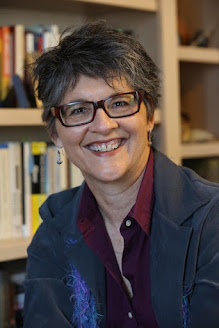
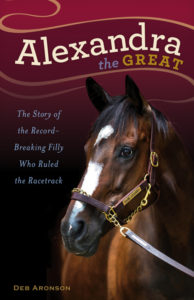
Deb lives in the Chicago area and writes lively articles for academic institutions and other nonprofits, but her true passion is sharing with children stories about ordinary people doing extraordinary things. She's the author of ALEXANDRA THE GREAT: THE STORY OF THE RECORD-BREAKING FILLY WHO RULED THE RACETRACK, which Deb describes as a "girl power" story even if the girl in question has four legs and hooves! Deb is a network representative for the Society of Children's Book Writers and Illustrators (SCBWI), and her newest nonfiction title comes out in May from Bedazzled Ink. 


Q: Hi Deb! Could you tell us about your newest book, and what sparked the idea?

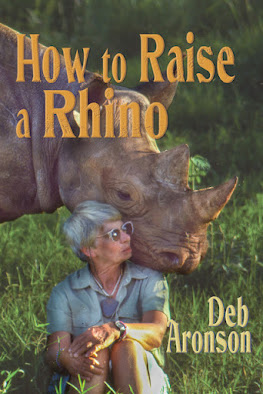
A: My newest book is titled, HOW TO RAISE A RHINO and it is a biography of a woman named Anna Merz. Anna retired from Ghana to Kenya, discovered that black rhinos were almost extinct and created a sanctuary for them. Along the way she raised an infant rhino to adulthood, which involved both hilarity and heartbreak.


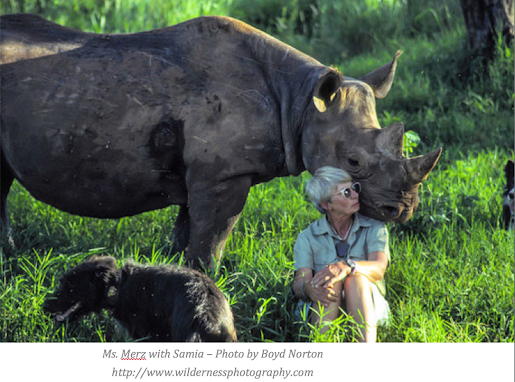
I first learned about Anna by reading her obituary (she died in 2013). It was accompanied by this photograph by Boyd Norton. Wouldn’t that catch your imagination?! I thought her story would appeal to MG readers.

Q: What was your research process like?

A: First, I googled. I read every obituary and news article I could find. Although she wasn’t “famous famous,” Anna was well known and respected and so many news outlets and web sites had stories about her. In the course of that work I found her god daughter, who she was very close to, as well as the founder of Rhino Resource Center (Kees Rookmaker), to whom she had donated all her journals. He scanned many pages and shared them with me. Anna also had written two books about her life and adventures, which I found and read. I traveled to England to meet her god daughter (Naomi Campbell but not the super model) and a couple other people who knew her. They pointed me to more people, including the American Association of Zoo Keepers (AAZK), which hosts special trips to the sanctuary for zoo keepers, and a few others. Next thing I knew, I was on a trip to Kenya, to the actual sanctuary, together with several people who had known Anna. I met more people there at the sanctuary, including both several trackers and Ian Craig, on whose land the sanctuary was established.


Q: Why did you choose to write this book for the mid-grade market?

A: The middle grade market is a catchall between picture books and YA. You have early independent readers who have conquered chapter books, as well as readers who are just about to launch into the YA world. That is a vast range of readers, and that makes it a very important phase. I was a strong reader growing up but never found biographies of ordinary people to read. It was only people like Marie Curie, whose life was hard and tragic and driven, which made her feel like an impossible role model.

To show readers at this level the kinds of lives people can make for themselves, if they have imagination and passion, is what gets me out of bed in the morning.


Q: What is the most difficult part of the writing process for you, and how do you get through it?

A: The hardest part for me is logistical — keeping track of all the pieces and parts of my research and of my drafts and worrying that I’ve lost track of some critical piece of information. I’ve tried apps like Evernote but I have yet to figure out a really good systematic way that prevents me from often throwing up my hands at the disarray, especially because I have learned I do best with old-fashioned pen and paper systems. I have come to accept that the only way around this struggle is through. In addition, my beloved critique group friends helped keep me going, as did putting the manuscript away for a while.


Q: What did this project teach you about yourself or your writing process?

A: Well, I never thought about this, but looking back I think I’ve discovered that I am more persistent than I’ve given myself credit for. This book idea was born in 2013, when Anna died. It took about four years to research and write it. Then I found an agent and she had it for about two years. Despite one close call she found no buyers. We parted ways, I went back to trying to sell it. I often wanted to give up, but instead I made a spreadsheet of potential agents and publishers, realized I hadn’t reached out to as many as I thought and kept going. I also want to mention here that I wouldn’t have gotten this far without my critique partners.


Q: What are you working on next?

A: I have an almost complete biography of African-American lawyer, civil rights activist, poet and Episcopalian priest, Pauli Murray. This has been a real act of love for me because I have several personal, though somewhat loose, connections to Dr. Murray, who has been recognized, among other things, as an early transgender advocate.

Thanks Deb!

Check out Deb Aronson's website, and follow her on Twitter Facebook, and Instagram.


Tuesday, February 14, 2023

Mission Possible: Winning Nonfiction Proposals!

By Stephanie Bearce


“Pssst! Hey! Writer!”

 “Yeah – you there reading the screen.”


“I’ve got a mission for you.”


“Wait! Wait! Don’t run away screaming in fear!”


“This is one mission that’s completely possible. And it could lead to your next book contract.”


“Got your interest now, don’t I?”


Writing and spying have a lot in common. Both require skin tough as a flak jacket, the flexibility of a ninja, and the cleverness of a cryptologist. But you are in luck. I’m going to give you the inside intel needed to crack the nonfiction market with a high-caliber template for a nonfiction proposal


Ready for action?


1. Sight the Target – First, you need to know your target reader. If you are writing for picture book readers, you do not need a proposal. You need the whole manuscript.

If you are writing for middle grade or older, a proposal is your passport to nonfiction publishing. Instead of spending hours (more likely MONTHS) writing a book that may not sell, you can write a proposal. This saves you time, but it is also beneficial to the editor. They may like your subject but would like you to change the presentation concept. Or perhaps they want you to consider a series. You can negotiate any changes the editor wants before you sign the contract. It’s a win-win.

2. Map the Mission – Create a chapter outline.

The editor needs to know that you have a clear vision for the book. Keep it brief. Just two or three sentences for each chapter. Give the highlights and most important concepts.

3. Show Your Tradecraft – Write two or three sample chapters.

Generally, they will be the first three chapters of the book. These need to be as close to perfect as possible. Sample chapters not only give the tone of the book but also display your writing ability. Be sure to include sample sidebars, fun facts, or activities. If you plan to have a glossary include a small selection of words. You will also want to include a sample bibliography. Highlight your primary sources.

4. Show Your Bona Fides – Write a resume.

Emphasize your experience and knowledge pertinent to this project. Do you have degrees in the field? Have you worked with a scientist or historian? Do you have a personal connection? Are you a research prodigy? This is the time to brag about yourself! Give a detailed account of your past publishing credits.

5. Set the Honey Trap – Make your proposal irresistible.

Use these key components to convince the editor that this is the book she wants to publish!

Target Audience – This goes beyond the age group you are writing for. In this section, you need to identify who will be purchasing your book. Will this book appeal to librarians? Teachers? Grandparents? Lovers of history? Science nerds? Kids who like animals? Write a short paragraph on each target audience and why this book will appeal to them.

Comparable Titles – This is a critical section and deserves a serious round of research. You need to find five titles that have been published within the last three years that are similar to your book. These should be profitable books that are like yours. This will help convince an editor that there is a market for your story. Do not select blockbusters like Harry Potter or Hunger Games. And always do a positive comparison. Do NOT bash other writers and their books!

Here is a sample from my successful Mary Anning Proposal:

Finding Wonders: Three Girls Who Changed Science
By Jeannine Atkins
Atheneum Books for Young Readers, 2017


This book received starred reviews for the author’s lyrical poems about scientists Maria    Merian, Mary Anning, and Maria Mitchell. A lovely combination of science and poetry, the author bases her 
imagined stories on the real lives of these three women. The popularity of this fictional book shows there is an audience and an appetite to know about the real life of early women scientists like Mary Anning. This is a need that Mary Anning – Paleontology from the Golden Age to the Present for Kids would fill.

  
Marketing and Promotion – What will you do to make sure your book SELLS? Give the editor concrete examples of the work you will do to market your book. List specific events that you will attend. List speaking engagements, school visits, library talks, conferences, literary festivals, and Nerd Camps. Are there holidays that will help sell your story? Can you connect with museums, science centers, or arboretums? Include traditional media outlets like radio, television, and local newspapers as well as social media platforms.

6. Mission Wrap Up – Submission!

Once you have completed the proposal you are ready to submit. Again, this requires a deep dive into author intelligence. If you are searching for an agent who wants nonfiction proposals here are a few places to scout. And don’t forget to use the FREE proposal template!

Good Luck! May your missions all be successful.

https://www.manuscriptwishlist.com/find-agentseditors/agent-list/

https://literaryagencies.com/list-of-literary-agents/best-literary-agents/

https://blog.reedsy.com/literary-agents/

https://brookevitale.com/blog/how-to-find-a-childrens-book-agent


If you are going directly to an editor, try these sources:

https://blog.reedsy.com/publishers/childrens/

https://barryfox.us/35-publishers-who-accept-unsolicited-submissions/


Meet the Author:

Stephanie Bearce is the author of 30 nonfiction books. 
 
You can follow her on Twitter @stephaniebearce
Instagram @stephaniemowrybearce
FB @stephanieMowryBearce