Showing posts with label Lisa J. Amstutz. Show all posts

Sunday, March 1, 2026

The Not-Just-Nonfiction-NINJAS

By Stephanie Bearce 

Another Nonfiction Fest has wrapped up, and once again, we are blown away.

For an entire month, generous writers shared their wisdom. We explored research rabbit holes, voice, structure, and how to turn facts into stories that breathe. It was a feast of curiosity and craft, and we’re deeply grateful to everyone who made it extraordinary.

For seven years, the Nonfiction Ninjas have hosted this celebration of learning. We love nonfiction. We love true stories. We love primary sources, surprising historical details, and the thrill of discovering something real and remarkable.

But here’s what some people don’t always realize:

We are not just nonfiction ninjas.

When you spend years studying fascinating real people and remarkable events, eventually your brain starts asking… what if?

Peggy Thomas’s love of gardening and nature didn’t stay neatly inside the nonfiction box. It inspired The Soil in Jackie’s Garden — and yes, she even participated in the Soil Your Undies Challenge.

Linda Skeers reminds us that best friends are even better than sprinkles — and we all know sprinkles improve everything!

Lisa Amstutz brings warmth and tradition to life in Our Christmas Tree Farm.

Nancy Churnin celebrates heart and Halloween in Lila and the Jack-o’-Lantern.

Susie K. Holt captures bold spirit in There Once Was a Cowgirl.

Christine Liu Perkins imagines mathematical shapes as characters in The Quest for a Tangram Dragon.

And then there’s me, lover of weird science and odd bits of history, writing about Raven Gallows, who lives in a funeral home and has a habit of uncovering mummies, lost diaries, and secret societies.

We, Ninjas, are full of surprises.

But here’s the thing.

We know good writing.

We’re seasoned publishing veterans who’ve revised more manuscripts than we can count. We’ve wrestled with tricky middles, reshaped story arcs, and strengthened characters until they felt real enough to walk off the page.

When a manuscript is almost there, we can see it. And we know how to help you carry it the rest of the way.

That’s why we’re inviting you to the 2nd Annual Total Ninja Experience: Revision Retreat & Children’s Writing Workshop
June 12–14, 2026
Hiawatha, Iowa

This workshop is designed for writers who already have a manuscript that needs critiquing, revision, editorial help, and guidance — fiction or nonfiction, picture book through YA and everything in between.

You’ll work directly on your manuscript with award-winning authors dedicated to helping writers elevate their craft. The faculty-to-critique group ratio is six to one or better, and participation is limited to maximize learning and keep the experience intimate and focused.

The weekend includes:

• Scheduled critique groups
• Brainstorming
• Impromptu discussions of craft
• Dedicated time to revise

Location:
Prairiewoods
120 East Boysen Road
Hiawatha, IA 52233-1277
(319) 395-6700
About 20 minutes from Eastern Iowa Airport (CID)

Programming and all meals are included in every option.

Retreat Options:

• Shared room/shared bath — $450
• Private room/shared bath — $650
• Stay off site (meals + programming included) — $375
• Solar-powered hermitage (no outlets, no charging), single occupancy — $400

Want to arrive early? Add Thursday (dinner Thursday plus Friday breakfast and lunch) for $100.

Check-in: 3:00 PM Friday
Check-out: 11:00 AM Sunday

Register early. Space is limited.

Because we may be called the Nonfiction Ninjas…

…but we are not limited to one section in a bookstore.

We live in nonfiction and novels. In gardening and ghosts. In Christmas tree farms and tangram dragons. In stories rooted in fact and stories born entirely from imagination.

We love true stories.
We love made-up stories.
Mostly, we love strong stories.

If you’re ready to strengthen yours, we’d love to see you in Iowa this June.

Tuesday, June 13, 2023

The Three Step Self-Edit

 By Lisa Amstutz

As writers, we spend so much time agonizing over our words that we tend to get attached to


them. It’s hard to look at them critically when it comes time to revise. Here are some tips to help you edit your own fiction or nonfiction picture book in three simple—though not necessarily easy!—steps.

 
Step 1: The Big Picture
 
Before you worry about the nitty-gritty, make sure your story works at the “big picture” level. Ask yourself the following questions about your story.
 

  • Is your story arc strong? Does it flow smoothly and in a logical manner from beginning to end?
  • Does the beginning of your story clearly establish the main character’s problem (if applicable)?
  • Does your main character solve that problem after several failed attempts that build toward the solution?
  • Does the main character’s personality/experience play into the solution somehow?
  • Does your story have a satisfying ending?
  • Does your story have “heart”—an emotional story arc or connection?

 
Step 2: Scene by Scene
 
Now let’s zoom in a little closer. Start by breaking your story into spreads. You can do this by making a dummy or by simply leaving an extra space between spreads in your manuscript. You’ll need 12–14 spreads for a traditional 32-page manuscript.
 

  • Does each spread contain a complete scene, with a character, a setting, and an action or change of some kind?
  • Think about what the art might show on each spread. Is there enough variety to make the book visually interesting?
  • Does the tension build from scene to scene?
  • Finally, look at your transitions. How can you tempt the reader to turn the page?

 
Step 3: Polish Your Prose
 
Now that you’ve looked at the big picture and the scene by scene view, it’s time to zoom in even closer and scrutinize each sentence.
 

  • Scan for adverbs and adjectives. Try to replace them with stronger nouns and verbs if possible (e.g., instead of saying someone walked quickly, say they trotted or jogged).
  • Do you have a lot of "he saids" and "she saids" in your text? Replace some of them with actions instead.
  • Look carefully at each sentence. Are you telling the reader something that will be shown in the art? If so, take it out.
  • Sprinkle in some alliteration, internal rhyme, onomatopoeia, or other literary devices. Try reading the story aloud to see if it sounds satisfying.

 
Happy revising!


Lisa is an author and literary agent. You can learn more about her at https://www.lisaamstutz.com/  or

https://www.stormliteraryagency.com/lisaamstutz
 

Tuesday, April 4, 2023

Try Nonfiction lite!

 By Peggy Thomas


For anyone who is leery of leaping into nonfiction writing, I’d like to suggest Nonfiction-lite. Adding a nonfiction element to your fictional project. One way is by adding nonfiction back matter. This works especially well if there is an historic or scientific element to your story.


For example, in 
How Fire Ants Got Their Fire, a fictional origin story, fellow ninja Susan
Kralovansky added a recipe for the main character’s “prizewinnin’ chili.” But what I like most is the creative way that she included facts about fire ants on the end pages. Each fact is displayed on a chili pepper.


My good friend Kathleen Blasi’s sweet story called Milo’s Moonlight Mission follows the

main character, Milo, as he helps his mother do all of her chores so she can accompany Captain Milo on his space launch. But when they hear about a meteor storm, they prepare for a new mission. Based on a real experience, Kathy added back matter that explains what a comet is and when to watch the Leonid Meteor shower each year. There is even a call to action as she asks readers if they will set their alarm to watch the next one.


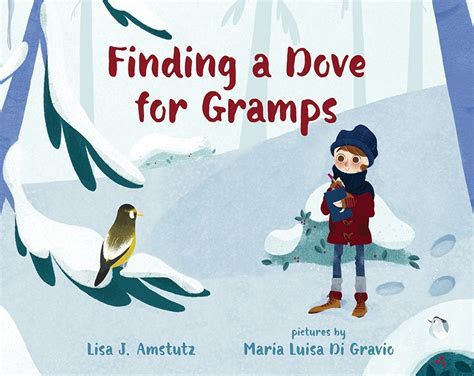
One more example comes from fellow Ninja Lisa Amstutz. Her picture book

called, 
Finding a Dove for Gramps, follows a boy and his mother as they participate in the Christmas Bird Count. Tension rises when the one bird they most hope to find proves elusive. In the back matter Lisa added a short description of the Bird Count, how to join, and most fun of all, a checklist of birds so readers can join in the hunt.
Adding nonfiction back matter to a fictional story adds educational value that librarians and teachers love, and added sales value that editors appreciate.

So, what kind of back matter could you add to your writing project? A recipe, craft, game, fun facts, background info, call to action…?

Leap in! Nonfiction is fun!

Peggy Thomas is the author of dozens of award-winning nonfiction titles including Lincoln Clears a Path.


Tuesday, March 14, 2023

The Power of a Mentor

By Lisa J. Amstutz 

When I look back over my 15-year writing journey, one thing that stands out is the importance of writing mentors. These writers took the time to teach and listen, and consistently pointed me in the right direction. I would not be where I am today without their guidance. 


My first mentor, Joanne, was a local writer whose work I admired. I screwed up the courage to invite her to lunch, and her encouragement was the push I needed to start submitting my work. Her invitation to a local writer’s group also opened a door to the writing world for me.
 
I met my next mentor at my first SCBWI meeting. As I listened to the critiques, I quickly realized how much I had to learn about writing for children. When the moderator mentioned a class she was teaching, I signed up on the spot. I continue to benefit from Laurie’s wisdom and insights to this day.
 
My agent has been another mentor to me. Before becoming an agent, Vicki modeled professionalism and a sincere desire to help other writers as our region’s SCBWI advisor. She continues that work today as an agent, and I continue to benefit from her example and direction.
 
There are too many others to list them all here. But I am so grateful to each one! The children’s writing community is amazingly generous and helpful.
 
So what should you look for in a mentor? To me, a good mentor is someone who is kind but honest about your work. They offer wise counsel and career advice. They help make you a better writer and human being.
 
A good mentor models success. They don’t need to be a New York Times bestseller, but they consistently achieve results in their own life in areas you want to emulate.
 
And finally, after listening and giving feedback, a good mentor will step back and let you make your own choices. Ultimately, it is your work and your career. You need to do what feels right to you.
 
The other side of this equation, of course, is becoming a mentor yourself. Wherever you are on your journey, don’t forget to extend a hand back to someone a step behind. There is nothing more rewarding than helping others succeed!
 
Who have been the mentors in your life? How have they helped you? Take a moment to thank them, and maybe give them a shout-out in the comments!


Lisa is the author of more than 100 books and mentors others through agenting and teaching. You can learn more about her work at https://www.lisaamstutz.com/.