Showing posts with label research. Show all posts

Saturday, February 28, 2026

When the Research Doesn't Match Your Vision

By Lauren H. Kerstein


My guiding force as an author, creative coach, and psychotherapist is to lift up others and help them feel seen. In writing HOPE RODE, I was thrilled that I had the opportunity to share a story with the world that not only lifted up and paid homage to librarians but also highlighted the strengths of rural communities in Kentucky during the great depression. 


This story also gave me the opportunity to spotlight some incredible women— Eleanor Roosevelt and Elizabeth Fullerton— in addition to the tenacious and tireless librarians who rode 100-120 miles per week over mountains, through creeks, and down treacherous landscapes to deliver books. 


I even had the opportunity to talk about horses and mules.


It was a beautiful story and an incredible opportunity, until…the research didn’t support my goal of helping others feel seen. 


Let me take a step back to explain.


After hundreds of pages of notes and many, anmy interviews, I could not find an answer to the following question: 

Was the BIPoC community included in the Packhorse Library Project?


I hit dead end after dead end. And then… I found a picture and I thought I had my answer.


I was so relieved as I wanted as much diversity in the illustrations as possible. I wanted everyone to feel seen.

But something nagged at me. Why was there only one picture? Why couldn’t experts verify whether or not the BIPoC community was involved? I wanted more information so that I could ensure my NONFICTION book was accurate. I didn’t want to suggest the BiPoC community was involved, if in fact, they were excluded. 


So, I kept digging.


Enter Reinette F. Jones, an outreach/research/reference librarian in Special Collections at

the University of Kentucky. Her research focuses on all things connected to African Americans in and from Kentucky. She told me the picture I found was actually from a Library Extension Program NOT the packhorse library program.


I was devastated.


“Yes,” she said, “libraries were and are incredibly important to the African American community. But “no,” she wouldn’t include any librarians of color in the packhorse program. It wasn’t historically accurate.


IT WASN’T HISTORICALLY ACCURATE.


I was faced with an excruciating choice. How could I help everyone feel seen if some were excluded from the program?


The following guideposts helped me decide what to do.


Nonfiction: I wanted to ensure my nonfiction book was just that… NONFICTION.


Facts: Facts have become more amorphous than I’d like in today’s world. I wanted to ensure my book included only FACTUAL information that I could reference because I’d cross-checked it with reputable sources.


Backmatter: I could use my backmatter as a place to address the BIPoC community and librarians in a clear and concise way.


Author Visits: I would have the opportunity to discuss this research dilemma with students in the classroom, not only to share my journey, but also to ensure each and every student felt seen.


Reality: The reality is that there are far too many heartbreaks in our history. Segregation. Racism. Discrimination. Hatred. Mistrust. The list goes on and on. If I were to suggest people of color were included in the packhorse library program, I would be contributing to misinformation, not highlighting the fact that these heartbreaks led to exclusion and lack of access.


At the end of the day, we, as nonfiction creators, are arbiters of truth. The research didn’t align with my initial vision, but it didn’t stop me from still highlighting these fierce, dedicated, and bold librarians who brought the gift of reading to rural Kentuckians during the great depression.


These badass women changed the world forever.


Perhaps, now, I need to take what I learned about the BIPoC community and Library Extension Services and write that book. Or share this knowledge with someone within the community who might want to write this important book.


Stay tuned…


But for now, I feel good that I remained an arbiter of truth as I shared what I’d learned about the packhorse library program.


Librarians are truly the backbone of our world!


About the Author: Lauren is an award-winning author, psychotherapist, creative coach, screenwriter, and NYT-bestselling ghostwriter. She is the author of the Rosie the Dragon and Charlie picture book series, Home for A While, Remembering Sundays with Grandpa, and Hope Rode. Additionally, Lauren writes books in her field and just released a book about emotion regulation. Lauren is one of the founders of #ReVISIONweek, a judge with Rate Your Story, and is a long-time member of 12x12 and SCBWI. Her writing goals are simple. Read voraciously. Embrace feedback. Grow each day. Work hard. Be passionate. Write courageously. Touch children’s hearts.


Thursday, February 19, 2026

USING SCHOLARLY JOURNALS IN YOUR RESEARCH

By Traci Huahn


One of the scenes in my debut picture book faced being cut at the eleventh hour, but was saved thanks to some obscure information about 19
th century fruits and vegetables that I found in two scholarly journals

I often turn to scholarly journals (meaning any kind of academic or peer-reviewed journal) as part of my research for a book. Since journal articles are written by experts in their field, they provide good overviews of a topic, put events and ideas into broader contexts, and be useful for tracking down primary sources.

One of my favorite sites for finding such articles is JSTOR. For those unfamiliar, JSTOR is a non-profit site that offers online access to thousands of digitized journal collections, open access books, images, primary sources and other materials from around the world. While some content requires you to be affiliated with a partner institution or have a paid subscription, I’ve found that most items are available using their free registration, allowing you to read all open access content and up to one hundred free views of licensed content each month.

To show how useful journal articles can be, the example that I’m sharing comes from my book Mamie Tape Fights to go to School: Based on a True Story (illustrated by Michelle Jing Chan, published by Crown Books for Young Readers). As a side note, though the book is historical fiction, the research for it was no less than for a nonfiction project and it was equally important to make sure that even fictionalized elements were as accurate and probable as possible. I won’t be going into detail about the ins and outs of nonfiction versus informational fiction or historical fiction, but for those interested in learning more, please check out this post by Colleen Paeff on Kirsten W. Larson’s blog and Nancy Churnin’s 2024 NF Fest post, both of which already offer excellent discussions.

Which brings us back to my dilemma about fruits and vegetables.

In the scene in question, the main character Mamie Tape plays alongside her siblings while their mom shops for ingredients to make a traditional Chinese New Year dish called jai, which contains mung bean noodles and vegetables like lily buds, fat choy, and bamboo shoots. Seems simple enough. Except that when the book went through my publisher’s final vetting, we received a note that mung bean noodles might not have been available in the United States at that time, and that fat choy and bamboo shoots were not yet being cultivated here.

We also got these comments about items shown in the art:


This scene (and two others that build off it) was based on Mamie Tape’s great-granddaughter telling me that when she was growing up, Mamie always helped prepare the jai for their family’s Chinese New Year meal. I also knew, from Mamie’s only-known interview, that their family had assimilated into mainstream American culture, but that food was one of the few Chinese traditions they kept. Of course, the fact that Mamie made and ate jai as an adult doesn’t necessarily mean she also did so as a child, so I fictionalized this detail, but it was important for it to still ring true to what could have been possible for the time period.

What to do? After a moment of panic, I thought about all the imported items I see when shopping at my local Asian market. Could any of the food sold in San Francisco Chinatown during Mamie’s time also have been imported?

I plugged in various search terms at JSTOR….and BINGO, up popped two articles! One in California Historical Society Quarterly, which references invoices from the U.S. Custom House in San Francisco, verifying that shipments of bamboo shoots and pomelos (among many other foods) were being imported from Hong Kong as early as the 1850s. And another, in Historical Archaeology, showing 19th-century ledgers from a California farm that employed Chinese workers listing groceries that included black fungus (an English translation for fat choy) and mung bean noodles.

With this information, the scene was saved! Some of the fruits that illustrator Michelle Jing Chan had chosen for the art had to be swapped out (sorry, lychee and durian!) but now armed with lists of other foods that could have been available, it was any easy fix.

So, next time you’re about to start new research, or when faced with a tricky last-minute detail, consider consulting some scholarly journals. If you’ve used JSTOR before, I’d be curious to know what you think of it and where its led you. And if you haven’t, I encourage you to poke around and see what you find!


Traci Huahn
(she/her) writes books for kids and especially loves stories rooted in Asian American culture, history, and identity. Her debut picture book, Mamie Tape Fights to Go to School, illustrated by Michelle Jing Chan (Crown Books for Young Readers, 2024), won the Chinese American Librarians Association 2025 Best Book Award for Children's Non-fiction and was named a CBC Notable Social Studies Trade Book for Young People. Her next soon-to-be-announced picture book will be published by G.P. Putnam’s Sons Books for Young Readers in 2028. Follower her on IG at @tracihuahn and learn more at www.tracihuahn.com.

Sunday, February 1, 2026

Making the Hard Stuff (look) Easy

By Cynthia Levinson


Writing nonfiction for kids is an act of translation. Doing the background research—interviewing scientists, visiting museums, reading a subject’s diaries, etc.—is thrilling. But the trick is to convert some of what you’ve learned into a book with kid-appeal (and editor-glee). This task is especially challenging when the material is technical, conceptual or just plain tough. How do top-of-their-game nonfiction writers pare the mountain of evidence they’ve amassed and channel what’s left into text and illustrations that are comprehensible and meaningful? Here are some approaches.

1. Keep it basic. Hardly anything could be more technically complex than physics (at least for me). In the picture book On a Beam of Light: A Story of Albert Einstein (Chronicle Books), author Jennifer Berne and illustrator Vladimir Radunsky draw in readers with an opening sentence that moves from the universal (“as the stars swirled in the sky”) to the familiar (“as the Earth circled the sun”) to the particular (“as the March winds blew through a little town by a river”) to the personal (“a baby boy was born”). Then, rather than delve into mechanics, they simplify the concept of light by focusing on a beam on which little Albert rides a bicycle!

In the philosophical realm, Paige Britt, with Sean Qualls and Salina Alko, accomplish the same magic with the highly conceptual, very low word count Why Am I Me? (Scholastic Press). 

2. Hook your reader at the get-go. In their picture book We Go Way Back (Roaring Book Press), Idan Ben-Barak and Philip Bunting talk directly to kids with the opening line “Hey, you! Yes, you!” After the page turn, they get serious: “What is life?” And, they’re off—with kids inevitably along for the ride.

3. Make the text conversational. This advice can be especially useful in books for older readers, who want more information but in digestible forms. Pamela S. Turner, who also talks directly to readers in How to Build a Human in Seven Evolutionary Steps (Charlesbridge), raises the questions she’s sure are in their minds, and then writes, “So glad you asked.” It’s as if she’s chatting with them.

4. Put the technical stuff into sidebars. Christina Soontornvat’s middle-grade All Thirteen: The Incredible Cave Rescue of the Thai Boys’ Soccer Team (Candlewick Press) tells a gripping story with suspense, personalities, and cultural context and places such technical scientific information as “Human Responses to Levels of Oxygen Concentration” into charts. She relegates other unfamiliar information, such as “Buddhism in Thailand,” to sidebars. 

5. Mix writing styles. The chapters in my books Fault Lines in the Constitution (with my husband, Sanford Levinson, Peachtree Publishers) and Who Owns the Moon? And Other Conundrums of Exploring and Using Space (with Jennifer Swanson, Margaret Quinlin Books) open with a short narrative story, then move on to expository legal, historical, and scientific information, mixed variously with graphics, sidebars, diagrams, QR codes, and other means of keeping readers actively engaged with the material. 

6. Let the illustrations convey the hard stuff. It’s not just science, philosophy, and law that can stump kid-lit writers. So can frightening experiences. Tonya Engel paints a ghost-like but dark and looming figure in Rise: From Caged Bird to Poet of the People (Lee & Low Books) to show the specter of a child molester while Bethany Hegedus’s subtle free verse merely hints at what might happen.

7. Respect your audience. Teens want and deserve to be taken seriously and can absorb and ponder serious subjects and material. Oppenheimer and the Atomic Bomb, written by Kai Bird and Martin J. Sherwin and adapted for young adults by Eric Singer (Putnam) deals with physics, politics, romance, and more. Susan Campbell Bartoletti’s They Called Themselves the KKK: The Birth of an American Terrorist Group (Houghton Mifflin), Deborah Heiligman’s Loudmouth: Emma Goldman vs. America (a love story) (Farrar Straus Giroux), and Ann Bausum’s White Lies: How the South Lost the Civil War, Then Rewrote the History (Roaring Book Press) all deal straight-forwardly with complex politics, undercurrents in America, and violence.

How can you accomplish what these authors do? Try this: Choose a topic about which you’re curious but know nothing. No WIPs allowed! (For instance, how does a refrigerator work? Or, what is the mind-body problem?) Next, list all of the questions you have about the topic. It’s likely that your questions will be as basic as your readers’. Now, using your questions and the suggestions above, write the first sentence of a book. 


About the Author: Cynthia Levinson writes nonfiction books for young readers, aged five and up. Focusing on social justice and law, her books have received the Robert F. Sibert Informational Book Medal; the Carter G. Woodson, Julia Ward Howe, and Crystal Kite Awards; Golden Kite honors; and Best Book recognition from multiple organizations, including the National Science Teaching Association, among other honors. She and her husband divide their time between Austin and Boston. 


Wednesday, February 26, 2025

WHAT TO DO WITH ALL THE RESEARCH THAT WON’T FIT INTO YOUR STORY

by Michelle Cusolito

One of the biggest challenges of writing nonfiction books is corralling the volume of research I uncover. And then, there’s always way more information than I can reasonably fit into the main text of the book. I used to get frustrated, but I learned all of that “stuff” is valuable.

I’ll share examples from my work with the hope that they’ll spark ideas for you.

My top 6 suggestions:

     1. Front Matter/Back matter/end papers: I always include an author’s note that explains how I came to the story and how I researched it. I also include selected sources and suggested books, films, websites, etc. so young readers can learn more. Sometimes we include a glossary, or a diagram related to the book. For example, In the World of Whales has a detailed diagram of sperm whale anatomy created by Jessica Lanan. Sometimes content is even included on the endpapers. My editor and I knew we wanted to include the life cycle of jellyfish in Jellyfish Scientist: Maude Delap and Her Mesmerizing Medusas, but it didn’t fit in the back matter. Ellen Rooney created a gorgeous illustration for the end papers.


2. Content for Classroom Teachers/Teacher’s Guides: Create materials for teachers. Sometimes publishers will create materials, as well. (Here’s an example my publisher created for Diving Deep). I’ve often shared my ideas in blogposts such as on Patricia Newman’s LitLinks. One post called Will it Sink or Float is a hands-on experiment that makes use of my first two books. How to Turn a Student into an Effective Science Communicator is a writing focused lesson that utilizes my second two books.

     3. Blog posts: I love to include “insider details” related to the making of my book in blogposts. For example, on Sue Heavenrich’s blog, I shared details about how I kept track of my research while living and working on a research vessel to write A Window into the Ocean Twilight Zone: Twenty-Four Days of Science at Sea. On Jonathan Roth’s blog, I shared how I prepared physically and mentally to be out at sea in the North Atlantic.

     4. Stories for School and Library Visits/Other Speaking Engagements/Interviews: There’s always a fun story or fact that you want to include in your book, but it simply does not fit the narrative or the structure of the book. For example, Maude Delap, the focus of my next book is known for being the first person to raise jellyfish through their full life cycle (in rural Ireland from 1899-1900!) But there’s this amazing story about her hiring some men to help her bury a (stranded) whale carcass in her garden to help decompose the stinky flesh. She later sent the skeleton to the Natural History Museum in Dublin where it’s still displayed. Oh, how I wanted to put that in the main body of my book, but it simply didn’t fit with the story I was telling. I mention it in the back matter and I love to elaborate upon it when I do public speaking events.


5. Social Media Posts: One of my favorite things to do in the lead up to publication is prepare short posts for social media that share additional details/behind the scenes information. I’m preparing some of those right now for Jellyfish Scientist. I’ve visited the island where Maude lived, so I’m creating posts with photos and/or short videos that show where she went to church, where she lived, where she discovered the sea anemone that was named after her, etc. I’ll also share photos of me with some of the experts who assisted with my research. (I did this for A Window into the Ocean Twilight Zone, if you want to see examples. Or, watch for my Jellyfish Scientist posts on Instagram, coming soon).

     6. Write a New Book: Both of the books I have publishing this year are examples of this. I learned about Maude Delap while I was researching for another (not yet sold) book. Likewise, I learned the remarkable story featured in the book, In the World of Whales, while researching for my book Diving Deep. In this extraordinary story, a freediver was welcomed at the birth of a sperm whale. I immediately knew it had to be a book.

What ideas came up for you as you read this post? Brainstorm a quick list while everything is fresh in your mind. As you continue working on your book, jot your ideas down as they come to you. And save everything, including drafts and dummies. Those are great materials for school visits!


About the Author
Photo by Marley Parker

Michelle Cusolito is the award-winning author of Flying Deep: Climb Inside Deep-Sea Submersible Alvin, Diving Deep: Using Machines to Explore the Ocean, and Window into the Ocean Twilight Zone: Twenty-Four Days of Science at Sea. Jellyfish Scientist: Maude Delap  and her Mesmerizing Medusas comes out in April, and In the World of Whales publishes in June. Her not-yet-announced sixth book is a “land-based” book. Yep. She’s branching out. Michelle teaches writing in the MFA program at Simmons University.

Sunday, February 16, 2025

KNOWING WHEN TO STOP RESEARCH

By Rebecca E. F. Barone

Nonfiction writers love to learn new things. But there’s so much information out there. The first time I wrote a book, I panicked. I couldn’t possibly read everything published on the subject or talk with every expert.

How do you know when to stop doing research?

These are four questions I use to help me.


1.) Does enough information exist on this topic?

An initial set of research is my first step in trying to find out if an idea is a viable topic or not. This is a quick survey of what’s easily accessible. Are there books at my local library or ones easily available through inter-library loans? Are there many experts working in the field, and can I find their contact info? 

The emphasis here is on quick. I’m not researching to learn anything, really, just to find out if I could learn something. 

I stop when I can answer this question with a definite yes or no. 


2.) Am I finding out new information?

This is a question for when I’m fully immersed in a project. I’m reading like crazy. I’m talking with people. I’m visiting museums and going places, taking notes, and adding sources to my reference manager like it’s going out of style. 

The first time I read a fact and realize I already knew it from previous research is an amazing feeling. I’m finally starting to feel comfortable with the subject!

The second time? I get bored. 

The third? …okay, time to be done.

I have to remember that a new source does not necessarily mean new material. If you aren’t finding out new information, then it’s time to wind down research. 


3.) Is my research age-appropriate?

There was a night while I was writing Unbreakable: The Spies Who Cracked the Nazis’ Secret Code when my husband and I were pouring over equations in a codebreaker’s memoir. My husband (who has a Ph.D. in aerospace engineering and minor in math) and I (who have two MS’s in mechanical engineering) sat at our kitchen table, trying and struggling to follow the codebreaker’s work.

If the two of us were having a difficult time with the material, was this level of detail going to be relevant to my MG readers at all? 

No.

It was research, to be sure. But it wasn’t useful.

It’s time to stop researching if you’re far beyond the scope of my audience.


4.) Is my research driven by the story?

White is the scariest color. There aren’t many things more terrifying to me than a blank page.

Research can become an excuse to delay writing. “Oh, I just need to read one more book, then I’ll start writing,” I tell myself. 

But no, I have to start writing. 

And when I’ve written the story, I’ll undoubtedly have some holes to fill in. There’s always some final research to do.

At this point, it’s tempting to shoe-horn in more and more cool facts. After all, the topic is so cool, right? I (and you!) wouldn’t be writing about it otherwise! This is the part, though, where letting the story guide the research is key.

It’s helpful here to lean on critique partners and beta readers. Do they understand the story? Is the information presented clearly? Let additional research be guided by the areas that need more explanation.

And then…be done. 

It really is okay to stop researching. 

So don’t panic. There’s a world’s worth of information out there, but it doesn’t have to be overwhelming! Use these questions to guide you, and don’t be afraid to drop me a line if you need an extra bit of reassurance. You, too, can stop researching, start writing, and finish a project!


About the author

Rebecca E. F. Barone is an engineer who has worked on injury analysis for the National Football League, knee mechanics during car crashes, development of gait biometrics, and engine calibration of hybrid cars. Realizing her love for books in addition to numbers, she now describes the world with words rather than equations. Her books include Race to the Bottom of the Earth: Surviving AntarcticaUnbreakable: The Spies Who Cracked the Nazis’ Secret Code, and Mountain of Fire: The Eruption and Survivors of Mount St. Helens. Her next, Double Crossed: The WWII Spies Who Saved D-Day will be published winter, 2026.

Wednesday, February 21, 2024

FOLLOW YOUR CURIOSITY: HOW I SURPRISED MYSELF AND BECAME A NONFICTION WRITER

By Marcie Colleen

I’ve never considered myself a nonfiction writer. In fact, major imposter syndrome has plagued me while sitting down to write this post. But while I don’t consider myself worthy of blogging for Nonfiction Fest, the truth is, I am a writer who has always followed her curiosity. And in 2016 my curiosity led me away from writing funny, pun-filled stories to write a narrative nonfiction picture book about the 9/11 Survivor Tree.

Never in a million years did I think I would write a story centered on the events of September 11th. For one, it was too emotionally charged for me. And two…nonfiction was totally out of my comfort zone. But when I first heard the story of the tree, I knew right away it needed to be a picture book. Someone needed to write it. And truthfully, I hoped that someone wasn’t me.

I had never written a narrative nonfiction before, and I had many doubts—mainly about my skills and ability. Did I have the poetic chops I felt it needed to be told? Was it my story to tell? What right did I have?

For the better part of a year, I held onto this story. Every so often it would pop into my mind, and I would quickly squash it. There was no way I could write it. I simply didn’t know how.

One day, shortly after I had moved from New York City to San Diego, I was having lunch in Balboa Park with a writing friend who was in from out of town. While catching up, the conversation inevitably turned to “What are you working on?” I shared some of what I had been mulling about in various stages. And then I found myself sharing the story of the 9/11 Survivor Tree. I could feel myself getting more and more passionate as I went along telling her about how this Callery pear tree was the last living thing to be pulled from the rubble of the collapsed World Trade Center. How it was taken to the Bronx for rehabilitation. About how workers laid cinder blocks at the base of the tree in memoriam of the home the tree once knew. How the Tree didn’t grow or bloom until a dove nested in it and then it thrived. And how it was replanted at the 9/11 Memorial in Lower Manhattan in time for the 10th anniversary. 

When I finished my friend paused, tears in her eyes, and said, “You need to write that story.” I think there was a part of me that agreed but the doubts flooded back in. However, my friend wouldn’t listen to excuses.

After we finished our lunch, we exited the café. We paused to talk for another moment and that’s when I looked to the left of me and standing proudly was a Callery pear tree. The same kind as the Survivor Tree. I couldn’t believe it. I hadn’t noticed one here. Only in New York City where they often lined the sidewalks. My friend insisted it was a sign. And a part of me wondered, was it? But I shrugged it off and we walked on.

Later that night I was once again in Balboa Park on a nighttime stroll with my husband. We were recapping our day for each other, and I told him about the conversation with my friend and how she was insistent that I tell the story of the 9/11 Survivor Tree. Just as I ended my recap, we turned to head back home and that’s when I saw them. Lining the pathway for as far as the eye could see—Callery pear trees in full bloom, their white blossoms shimmering in the moonlight! Why hadn’t I seen them before? Had they waited until now to reveal themselves? Was the tree choosing me?

This time I took it as a definite sign.

From that moment on, I dedicated myself to researching and drafting a lyrical narrative nonfiction telling of the story of the 9/11 Survivor Tree.  I looked for support and resources where I could, taking classes on poetry and webinars on nonfiction writing. And through the process I cried a lot.

In 2021, in time for the 20th anniversary of 9/11, SURVIVOR TREE, illustrated by Caldecott Honor winning Aaron Becker was published by Little, Brown. It’s a book I am super proud of. And while I still don’t consider myself a nonfiction writer, I am sure glad I followed my curiosity along that tree-lined path. I hope this post encourages you to do the same.


About the Author: 

Marcie Colleen is a multi-published author of picture books, chapter books, and comics. Her picture book, SURVIVOR TREE, illustrated by Aaron Becker, was her first foray into non-fiction and garnered many accolades, including starred reviews from Publisher’s Weekly, the Horn Book, Booklist, and Kirkus. Additionally, SURVIVOR TREE was named a 2022 Notable Social Studies Trade Book from the National Council for Social Studies, a 2022 Children’s Choice book from the Cooperative Children’s Book Center, a Bank Street College Best Book of 2022, a 2021 Best Nonfiction Picture Book by the Nerdy Book Club, and a prestigious ALA 2022 Notable Book. Visit www.thisismarciecolleen.com to learn more.

Monday, February 12, 2024

STEP BY STEP: THE JUNKO TABEI-INSPIRED RESEARCH JOURNEY

By Anita Yasuda   


On the morning of May 16, 1975, Junko Tabei became the first woman to summit Mount Everest. How did she do it? One step at a time: Up, Up, Ever Up! You, too, will succeed in your research journey one step at a time by setting a course, planning, using the proper gear, and with a supportive team.


1. Pick Your Target 

Junko and the other 14 members of the Japanese all-women team chose Everest after careful consideration and research. I decided on Junko as my subject using the same method. As an avid hiker and outdoor enthusiast, I wanted to write a story about mountaineering and a female climber. I also have friends involved in mountain climbing and have always found their stories of high-altitude adventures thrilling. Likewise, write about a subject that makes your heart sing. If it has caught your interest, someone else will also be intrigued. Do not worry if someone else has written on the same subject. Just as there are a variety of wilderness trails, from short walks to adventures requiring ropes and ice axes, a unique story angle combined with your voice will help make your manuscript stand out.


2. Master The Ropes

Climbers only plunge into the wilderness after setting a course. You can avoid becoming tangled in research through planning, too. Decide on day one how you will collect and organize your research. Are you team pencil and paper? With this approach, your subject becomes clearer, sentence by sentence. Do you prefer journaling, which includes drawing and adding physical materials such as photographs or newspaper articles into a file? Using this method, visual thinkers will see their story taking shape. Are you team virtual? When I began researching Junko, I planned on travelling to Japan and Nepal. However, due to the COVID-19 pandemic, these plans had to be put aside. So, using Word, I set up a research file that would include over 100 footnotes to keep track of every source, quote and statistic. The file had subheadings, including Junko’s childhood, first hike, and family. 


3. Get The Gear 

When climbing, you need to dress in layers; in writing, layers are also essential. To better understand Junko, I researched widely. Secondary sources, including journals and newspaper articles, gave me a sense of Junko, the team's difficulties, and the period. Through my local library, I took advantage of interlibrary loans. I was then able to access more extensive state and international libraries. I accessed journals, including JSTOR, and newspaper archives in Japan through my university’s alumni lending program. I watched online interviews and eventually created a list of experts I contacted, including Junko's best friend and fellow Everest climber, translator, colleagues, and friends worldwide. They helped me clarify my information and add details to my manuscript that hadn't appeared in print before. 


4. Prepare For The Avalanche 

Mountaineers learn as much as they can about avalanche risk before heading out. They study the forecast, take courses, and venture out prepared with gear such as crampons and helmets. When you feel overwhelmed by research, take a break. Be kind to yourself. A long walk or putting away your work for weeks or months will help you achieve clarity. Another tip is to write down your book's hook and keep it on your writing desk or your computer. My hook in presenting Junko's life combined her achievements with her humanitarian and environmental legacy.


5. Teamwork 

All successful mountaineering expeditions require a solid team. Writing does not have to be a solitary activity. Share your story with trusted critique partners. Even if you do not have a draft ready, share your enthusiasm for your project. When you explain your project aloud, it will remind you why you began the journey. These critique partners will be essential as you revise and rewrite. Rewriting is a beautiful way to hone your craft. Feedback that resonates with you can help you chip away at your manuscript until you have a clear story path from beginning to end.


See you at the summit!

Be kind to yourself. Researching and drafting a book is a process. There may be obstacles on the journey, but with each piece of information and revision, you will be closer to the summit. One day, a child will be happy you did.


About the Author 

Anita Yasuda is the author of UP, UP, EVER UP! JUNKO TABEI A LIFE IN THE MOUNTAINS , illustrated by Yuko Shimizu (Clarion, 2024); DIWALI: A FESTIVAL OF JOY , illustrated by Darshika Varma (Penguin Random House, 2024); and BOLLYWOOD BEAT, illustrated by Archana Sreenivasan (Kids Can Press, 2025), as well as many other books for young readers. She has a background in Montessori and early childhood education. Anita lives in the rolling hills of Ontario with her family.


Tuesday, April 25, 2023

AUTHOR Q & A with DEB ARONSON

By Peggy Thomas


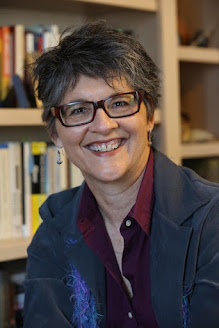
Today, we're talking to nonfiction author Deb Aronson

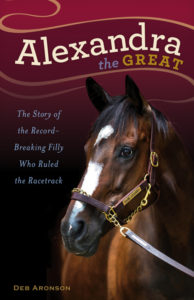
Deb lives in the Chicago area and writes lively articles for academic institutions and other nonprofits, but her true passion is sharing with children stories about ordinary people doing extraordinary things. She's the author of ALEXANDRA THE GREAT: THE STORY OF THE RECORD-BREAKING FILLY WHO RULED THE RACETRACK, which Deb describes as a "girl power" story even if the girl in question has four legs and hooves! Deb is a network representative for the Society of Children's Book Writers and Illustrators (SCBWI), and her newest nonfiction title comes out in May from Bedazzled Ink. 


Q: Hi Deb! Could you tell us about your newest book, and what sparked the idea?

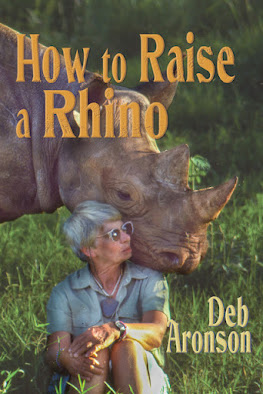
A: My newest book is titled, HOW TO RAISE A RHINO and it is a biography of a woman named Anna Merz. Anna retired from Ghana to Kenya, discovered that black rhinos were almost extinct and created a sanctuary for them. Along the way she raised an infant rhino to adulthood, which involved both hilarity and heartbreak.


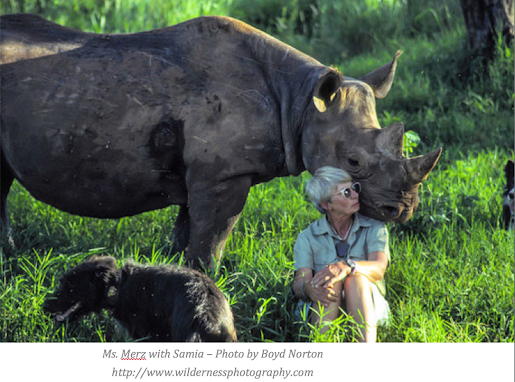
I first learned about Anna by reading her obituary (she died in 2013). It was accompanied by this photograph by Boyd Norton. Wouldn’t that catch your imagination?! I thought her story would appeal to MG readers.

Q: What was your research process like?

A: First, I googled. I read every obituary and news article I could find. Although she wasn’t “famous famous,” Anna was well known and respected and so many news outlets and web sites had stories about her. In the course of that work I found her god daughter, who she was very close to, as well as the founder of Rhino Resource Center (Kees Rookmaker), to whom she had donated all her journals. He scanned many pages and shared them with me. Anna also had written two books about her life and adventures, which I found and read. I traveled to England to meet her god daughter (Naomi Campbell but not the super model) and a couple other people who knew her. They pointed me to more people, including the American Association of Zoo Keepers (AAZK), which hosts special trips to the sanctuary for zoo keepers, and a few others. Next thing I knew, I was on a trip to Kenya, to the actual sanctuary, together with several people who had known Anna. I met more people there at the sanctuary, including both several trackers and Ian Craig, on whose land the sanctuary was established.


Q: Why did you choose to write this book for the mid-grade market?

A: The middle grade market is a catchall between picture books and YA. You have early independent readers who have conquered chapter books, as well as readers who are just about to launch into the YA world. That is a vast range of readers, and that makes it a very important phase. I was a strong reader growing up but never found biographies of ordinary people to read. It was only people like Marie Curie, whose life was hard and tragic and driven, which made her feel like an impossible role model.

To show readers at this level the kinds of lives people can make for themselves, if they have imagination and passion, is what gets me out of bed in the morning.


Q: What is the most difficult part of the writing process for you, and how do you get through it?

A: The hardest part for me is logistical — keeping track of all the pieces and parts of my research and of my drafts and worrying that I’ve lost track of some critical piece of information. I’ve tried apps like Evernote but I have yet to figure out a really good systematic way that prevents me from often throwing up my hands at the disarray, especially because I have learned I do best with old-fashioned pen and paper systems. I have come to accept that the only way around this struggle is through. In addition, my beloved critique group friends helped keep me going, as did putting the manuscript away for a while.


Q: What did this project teach you about yourself or your writing process?

A: Well, I never thought about this, but looking back I think I’ve discovered that I am more persistent than I’ve given myself credit for. This book idea was born in 2013, when Anna died. It took about four years to research and write it. Then I found an agent and she had it for about two years. Despite one close call she found no buyers. We parted ways, I went back to trying to sell it. I often wanted to give up, but instead I made a spreadsheet of potential agents and publishers, realized I hadn’t reached out to as many as I thought and kept going. I also want to mention here that I wouldn’t have gotten this far without my critique partners.


Q: What are you working on next?

A: I have an almost complete biography of African-American lawyer, civil rights activist, poet and Episcopalian priest, Pauli Murray. This has been a real act of love for me because I have several personal, though somewhat loose, connections to Dr. Murray, who has been recognized, among other things, as an early transgender advocate.

Thanks Deb!

Check out Deb Aronson's website, and follow her on Twitter Facebook, and Instagram.