Showing posts with label nonfiction writing tips. Show all posts

Friday, February 16, 2024

JOURNALING MY WAY TO A BOOK

by Christine Liu-Perkins                                          

One indispensable writing strategy for me is journaling. Until I write them down, my thoughts are usually a jumbled, incoherent mess. Processing them through journaling lets me see what I’m thinking and helps me develop my ideas. My “Thinking Journals” are plain spiral notebooks that I write in with a black Parker Jotter pen. Their simplicity frees me to be open and imperfect.

What do I write about in my Thinking Journals?

  • I record key pieces of information from research that I want to remember. I ponder and analyze them. I consider why they are important and how they frame other pieces of information.
  • I ask questions and try to answer them. What do I not yet understand? Where am I confused? What else do I need to learn about?
  • I create lists, concept maps, comparison charts, timelines, and other graphics to organize information and help me see patterns.
  • I identify themes that I see emerging from the research. At some point I decide which theme will be the center of the book.
  • I express problems, frustrations, and disappointments and talk myself through ways to solve them. I also take note of progress, insights, and encouraging experiences.
  • I brainstorm different ways of approaching and structuring parts of the book. What are the pros and cons of each? What best fits what I want the book to be?
  • I’ll freewrite several different opening sentences for a chapter or section. Which sentence best leads into the material? Which one is most interest-grabbing? Which one invites me to keep writing?
  • I consider the audience. What will readers want to know? What background information do they need to understand the book? What do I want them to gain from reading the book?
  • I’ll try whatever helps! I’m no artist, but once I made a sketch with stick figures that turned into the conclusion for my first book. For my upcoming book, I wrote out a song for one of the characters.

Like an incubator, a Thinking Journal is where I develop a book. It gives me space to explore and process ideas without feeling pressure to make them presentable to anyone but me. By the time it comes to write, I’m well prepared to turn my thoughts into words for readers.

What are your experiences with journaling? How have you found it useful in your writing?


Meet the Author:

Christine Liu-Perkins is a founding member of the Nonfiction Ninjas. She is the author of AT HOME IN HER TOMB: Lady Dai and the Ancient Chinese Treasures of Mawangdui, which received starred reviews and appeared on multiple “best books of the year” lists. She has also written articles for Dig Into History and Highlights. For her upcoming book, THE QUEST FOR A TANGRAM DRAGON (Bloomsbury, August 2024), she created numerous tangram configurations that she traced into a Thinking Journal while travelling overseas.  Learn more at www.christineliuperkins.com .   


Coming this fall from Bloomsbury 
Words by Christine Liu-Perkins and illustrations by Lynn Scurfield  


Thursday, February 2, 2023

Nonfiction Tips

By Dow Phumiruk


I’ve had the privilege of working on several nonfiction picture books by incredible authors. I thought I’d share a few tips from my experience.

Universal theme and drama

Not all nonfiction picture books need to be dramatic. However, if the book is based on an incredible, true story, your readers will be intrigued. So, consider starting with a gripping story! 

In TITAN AND THE WILD BOARS by authors Susan Hood and Pathana Sornhiran, a Thai soccer team is trapped in a flooded cave system, and efforts to rescue them come from all over the world. The universal theme of teamwork makes for wide appeal. Everyone wanted those boys brought to safety!

Susan’s beautiful, poetic writing heightens the emotion.

Think about what themes you want to share. Some common nonfiction biography themes in books I’ve worked on are persistence, bravery, loyalty, friendship, and innovation.

Sketch from TITAN AND THE WILD BOARS: THE TRUE CAVE RESCUE OF THE THAI SOCCER TEAM, by Susan Hood and Pathana Sornhiran, HarperCollins]

Timeliness

AN EQUAL SHOT: HOW THE LAW TITLE IX CHANGED AMERICA, written by Helaine Becker, released just before the 50th anniversary of Title IX. Though this law focused specifically on equality for women in government funded institutions in the United States, it paved the way for legislation to protect people of all different sexual orientations, races, and abilities as well.

What milestone anniversaries will happen in the next few years? Look back in history a few decades. You may be able to generate ideas for your next nonfiction project. Keep in mind, your book may take a few years to be published after it has been acquired, so I’d suggest working at least five years ahead. If your book isn’t published by the milestone anniversary date, it can still be an important addition to libraries and schools. And it’ll be ready for the next milestone anniversary!

Research

Not unexpectedly, research is the most important part of writing a nonfiction book. You want to bring the most up-to-date, accurate, and thorough information you can find to your project. 

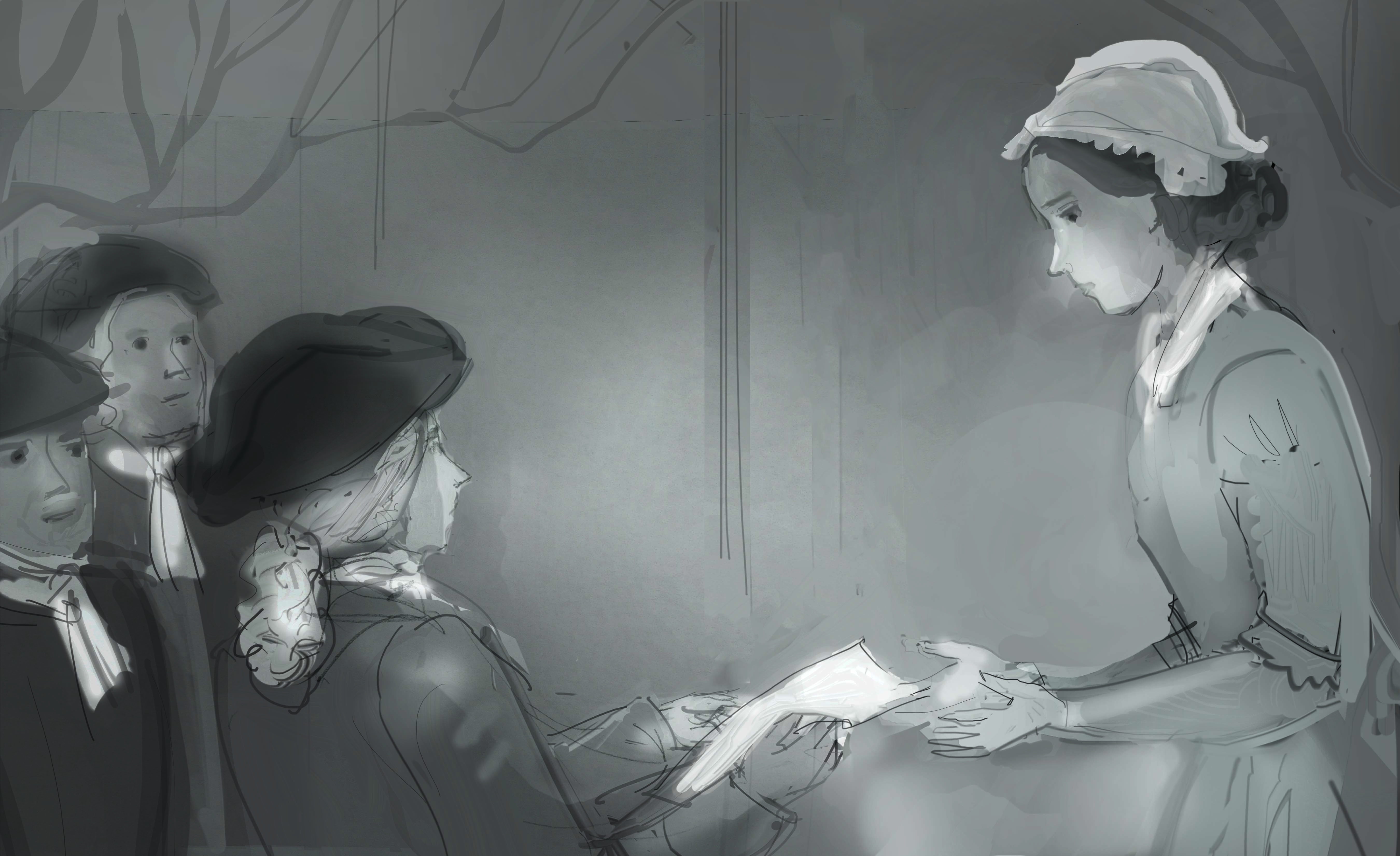
In HER NAME WAS MARY KATHARINE, Ella Schwartz brings the story of this early feminist to light with meticulous research on Mary Katharine Goddard’s life and work. Mary Katharine was a printer, the first woman Postmaster, and a fierce patriot. She printed the Declaration of Independence for circulation.

Ella was able to visit the Library of Congress to see some of the newspapers Mary Katharine printed. She was able to visit a copy of the Declaration of Independence with Mary Katharine’s name printed at the bottom as well. I, in turn, was able to use her photographs in the artwork: pictures of newspaper text became textured backgrounds in some of the spreads.

Sketch from HER NAME WAS MARY KATHARINE: THE ONLY WOMAN WHOSE NAME IS ON THE DECLARATION OF INDEPENDENCE, by Ella Schwartz, Christy Ottaviano Books]


I’d suggest keeping organized records of your reference material. Your book will go through copyediting and fact checking, and you’ll want to be able to support all of your manuscript. You’ll also want to include sources in the book’s back matter. This way, students can be directed to additional reference material for further study. Teachers appreciate this!

Also, the illustrator may appreciate having your “scrap” materials. In general, authors and illustrators do not interact when working on a project together. But for nonfiction, we may make an exception with respect to researched materials. The publisher served as a go-between for this.

Connecting with a primary source is ideal when feasible. Helaine Becker talked to Katherine Johnson by phone for our book COUNTING ON KATHERINE. On the other hand, online resources abound for many public figures and field experts on just about any imaginable subject, so it is possible to write a successful nonfiction book from internet interviews, books, and images.

Helaine skillfully tells Katherine Johnson’s story tackling issues like racism and physics (such as how Katherine used math to predict the trajectory of the space shuttle) in an accessible, child-friendly way.

Sketch from COUNTING ON KATHERINE: HOW KATHERINE JOHNSON SAVED
APOLLO 13
, by Helaine Becker, Christy Ottaviano Books]


What to include and what to leave out

For a picture book biography, you may gravitate to a cradle-to-grave format, but this isn’t always necessary. You can frame the story around a smaller portion of someone’s life, such as from middle childhood to one of the person’s peak accomplishments. Children will be interested in the main character’s childhood, so including some aspect of the main character’s youth is a great idea.

In A LIFE OF SERVICE, Christina Soontornvat expertly focuses on key events of Senator Tammy Duckworth’s life to make the story work well. For example, Christina shares about Senator Duckworth’s love for flying as a helicopter pilot for the U.S. army before talking about the tragedy of her near loss of life after Senator Duckworth’s helicopter was shot down by Iraqi insurgents. This juxtaposition adds additional impact and weight to the horrific event. Then we follow Senator Duckworth’s recovery and eventual run for office. By highlighting key life events, we better understand Senator Duckworth’s drive and determination.

Sketch from A LIFE OF SERVICE: THE STORY OF SENATOR
TAMMY DUCKWORTH
, by Christina Soontornvat, Candlewick]


In TITAN AND THE WILD BOARS: THE TRUE CAVE RESCUE OF THE THAI SOCCER TEAM, the majority of the book covers just a few weeks’ time.


Style

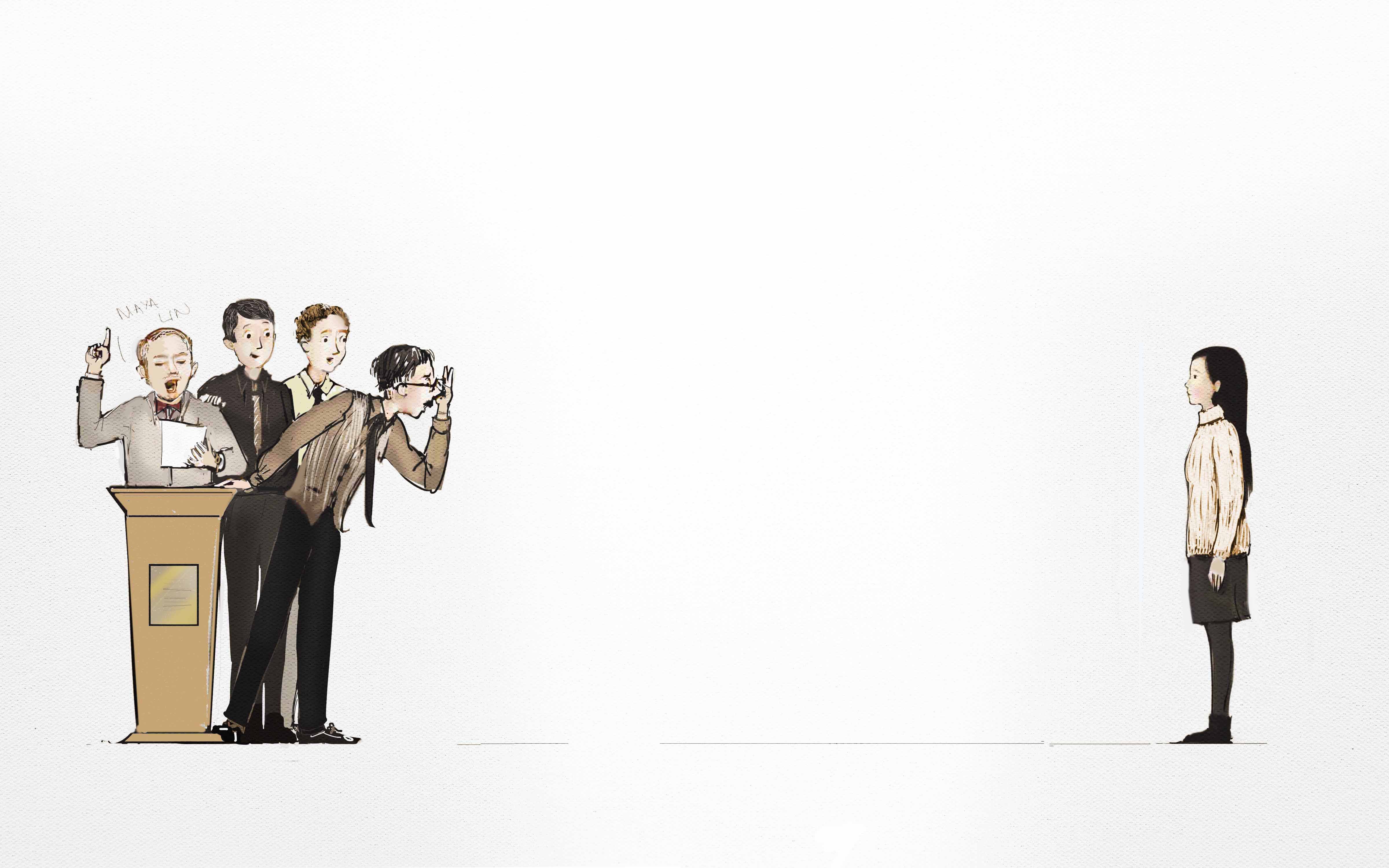
Jeanne Walker Harvey’s style in writing MAYA LIN: ARTIST-ARCHITECT OF LIGHT AND LINES is light and lyrical, lending an artistic style to parallel the life of the main character. In creating the artwork, I also leaned into a style that would match Maya Lin’s: clean lines, soft colors inspired by nature, and the inclusion of some abstract elements. Together, I feel the subject, text, and art are cohesive as a result. So, think about your approach to writing based on your subject.

Sketch from MAYA LIN: ARTIST-ARCHITECT OF LIGHT AND LINES,
by Jeanne 
Walker Harvey, Christy Ottaviano Books]

 
An artist’s biography can be an artistic book. A comedienne’s biography or book about a funny subject can be written in a humorous style. I even imagine jokes peppered throughout the text! Don’t worry: your publishing team will find the right artist whose style will match your manuscript.

I hope you find some of these tips helpful. Good luck on your nonfiction writing journey!


Meet the Author:

Dow Phumiruk writes and illustrates children’s books, with twelve in print and eight more to come. She is the illustrator of A LIFE OF SERVICE, written by Newbery Honor winner Christina Soontornvat. She is one of the illustrators of YES WE WILL, by NYT bestselling author Kelly Yang. She is also the illustrator of COUNTING ON KATHERINE by Helaine Becker. MELA AND THE ELPHANT and HUGSBY, both written by Dow, are Colorado Book Award finalists. Dow is a retired pediatrician who teaches medical students part time. For more about her, visit