Showing posts with label field research. Show all posts

Sunday, February 1, 2026

Making the Hard Stuff (look) Easy

By Cynthia Levinson


Writing nonfiction for kids is an act of translation. Doing the background research—interviewing scientists, visiting museums, reading a subject’s diaries, etc.—is thrilling. But the trick is to convert some of what you’ve learned into a book with kid-appeal (and editor-glee). This task is especially challenging when the material is technical, conceptual or just plain tough. How do top-of-their-game nonfiction writers pare the mountain of evidence they’ve amassed and channel what’s left into text and illustrations that are comprehensible and meaningful? Here are some approaches.

1. Keep it basic. Hardly anything could be more technically complex than physics (at least for me). In the picture book On a Beam of Light: A Story of Albert Einstein (Chronicle Books), author Jennifer Berne and illustrator Vladimir Radunsky draw in readers with an opening sentence that moves from the universal (“as the stars swirled in the sky”) to the familiar (“as the Earth circled the sun”) to the particular (“as the March winds blew through a little town by a river”) to the personal (“a baby boy was born”). Then, rather than delve into mechanics, they simplify the concept of light by focusing on a beam on which little Albert rides a bicycle!

In the philosophical realm, Paige Britt, with Sean Qualls and Salina Alko, accomplish the same magic with the highly conceptual, very low word count Why Am I Me? (Scholastic Press). 

2. Hook your reader at the get-go. In their picture book We Go Way Back (Roaring Book Press), Idan Ben-Barak and Philip Bunting talk directly to kids with the opening line “Hey, you! Yes, you!” After the page turn, they get serious: “What is life?” And, they’re off—with kids inevitably along for the ride.

3. Make the text conversational. This advice can be especially useful in books for older readers, who want more information but in digestible forms. Pamela S. Turner, who also talks directly to readers in How to Build a Human in Seven Evolutionary Steps (Charlesbridge), raises the questions she’s sure are in their minds, and then writes, “So glad you asked.” It’s as if she’s chatting with them.

4. Put the technical stuff into sidebars. Christina Soontornvat’s middle-grade All Thirteen: The Incredible Cave Rescue of the Thai Boys’ Soccer Team (Candlewick Press) tells a gripping story with suspense, personalities, and cultural context and places such technical scientific information as “Human Responses to Levels of Oxygen Concentration” into charts. She relegates other unfamiliar information, such as “Buddhism in Thailand,” to sidebars. 

5. Mix writing styles. The chapters in my books Fault Lines in the Constitution (with my husband, Sanford Levinson, Peachtree Publishers) and Who Owns the Moon? And Other Conundrums of Exploring and Using Space (with Jennifer Swanson, Margaret Quinlin Books) open with a short narrative story, then move on to expository legal, historical, and scientific information, mixed variously with graphics, sidebars, diagrams, QR codes, and other means of keeping readers actively engaged with the material. 

6. Let the illustrations convey the hard stuff. It’s not just science, philosophy, and law that can stump kid-lit writers. So can frightening experiences. Tonya Engel paints a ghost-like but dark and looming figure in Rise: From Caged Bird to Poet of the People (Lee & Low Books) to show the specter of a child molester while Bethany Hegedus’s subtle free verse merely hints at what might happen.

7. Respect your audience. Teens want and deserve to be taken seriously and can absorb and ponder serious subjects and material. Oppenheimer and the Atomic Bomb, written by Kai Bird and Martin J. Sherwin and adapted for young adults by Eric Singer (Putnam) deals with physics, politics, romance, and more. Susan Campbell Bartoletti’s They Called Themselves the KKK: The Birth of an American Terrorist Group (Houghton Mifflin), Deborah Heiligman’s Loudmouth: Emma Goldman vs. America (a love story) (Farrar Straus Giroux), and Ann Bausum’s White Lies: How the South Lost the Civil War, Then Rewrote the History (Roaring Book Press) all deal straight-forwardly with complex politics, undercurrents in America, and violence.

How can you accomplish what these authors do? Try this: Choose a topic about which you’re curious but know nothing. No WIPs allowed! (For instance, how does a refrigerator work? Or, what is the mind-body problem?) Next, list all of the questions you have about the topic. It’s likely that your questions will be as basic as your readers’. Now, using your questions and the suggestions above, write the first sentence of a book. 


About the Author: Cynthia Levinson writes nonfiction books for young readers, aged five and up. Focusing on social justice and law, her books have received the Robert F. Sibert Informational Book Medal; the Carter G. Woodson, Julia Ward Howe, and Crystal Kite Awards; Golden Kite honors; and Best Book recognition from multiple organizations, including the National Science Teaching Association, among other honors. She and her husband divide their time between Austin and Boston. 


Monday, February 10, 2020

There's Nothing Like Being There: Doing Research in the Field

By Mary Kay Carson

As an author of mostly middle-grade nonfiction, my days are spent doing research. The actual writing only happens after months (or years) of background reading, digging up facts, interviewing experts, poring over documents and papers, and more reading. The manuscript is the icing on the cake, the tip of the iceberg, or some other metaphor that means “you’ve no idea how much work went into this.”
          

Netting bats
Those who write nonfiction are often history buffs, science nerds, and news junkies. The job requires an endless fascination for obscure details and an obsessive drive to puzzle out the inner workings of something or other. Why else would you stick with a topic through months (or years) of research? Some get a thrill exploring primary sources—old diaries, letters, historical records, and first person accounts of long-ago happenings. Others revel in the “Did you know…” uncovering of a forgotten maverick, misunderstood event, or new discovery.

What motivates me during book research is the chance for unique, salient experiences. Like what? Staying up all night in a Texas pecan grove netting and banding bats. Being in the audience when the first images ever of Pluto’s surface are revealed. Getting a geyser tour from Park Service geologists at Yellowstone National Park. Chasing down a tornado in western Kansas with a van full of meteorology students. Scratching the head of the first Sumatran rhino born in captivity in a century. All were made possible by being in the field while doing book research.


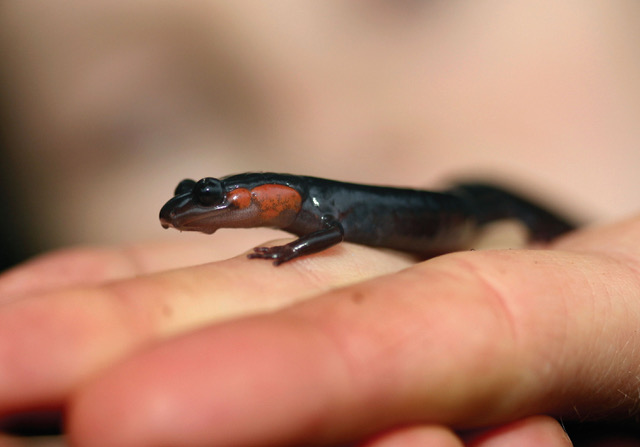
The opportunity for once-in-a-lifetime experiences that I knew I’d get to share with young readers is why I’ve written six titles in Houghton Mifflin Harcourt’s Scientists in the Field series. Because while everything I’ve described can be seen on PBS or YouTube, it’s not the same as being there. Especially when you’re going to write about it. Everyone tries to heed the “include all five senses in your writing” dictum. But it’s difficult to know what the Sonoran Desert smells like (cooking herbs, tar, and soap) from a TV show. And my description of what salamander skin feels like or how Old Faithful sounds at night will differ from yours. Perception is reality, after all. 🙂

Knowing I’m going to recount my experience for readers sharpens my senses. I want to make sure I remember, so I take notes—not just about what’s going on but what it’s like to be there. I think of that third grader in a gymnasium during a school visit whose eyes light up when I mention storm chasing. What was it like? Weren’t you scared?


I take written notes and use a digital voice recorder while in the field with scientists to catch my impressions at the moment. Besides recording interviews, I use the recorder for quick “notes to self” about where I am and what I’m sensing. What’s the setting like, what do I hear, smell, feel?

These notes and recordings become invaluable months (or years) later when I’m drafting the manuscript. Rereading or listening to them transports me back, helps me relive being there, and returns me to the scene I want to recount for readers. I often write in a narrative style that features scenes punctuated by sections of information peppered with quotes. Featuring you-are-there scenes engages readers and makes them want to know more. They’re already invested in the information they’re about to receive. Instead of an info dump, the text is food for hungry minds!


Unfettered time with scientists and other experts is another terrific benefit of tagging along with researchers in the field. Interviews via telephone, Skype, or at an office are formal affairs. The interviewee has set aside (likely limited) time to answer your questions. The conversation will probably be productive, informative, and cordial. With luck it might be insightful, lively, and awe-inspiring. But it takes time to get to know a person, to understand how she or he views the world, and to discover what motivates him or her.

 
Tracking a storm

Field work involves lots of down time: long drives across tornado alley, waiting for darkness outside bat caves, hiking to a saguaro grove to measure growth. The casual conversations while unloading and setting up equipment, over meals on the road, or while hiking are when I really get to know people. It’s when I find out the reason a planetary scientist gave up on becoming an astronaut, why an evolutionary ecologist has always loved amphibians, how a meteorologist overcame being told she wasn’t good enough, and what an endangered species expert most worries about.

All this juicy stuff adds flavor to a manuscript. It also makes the experts you’re quoting into three-dimensional people that young readers relate to. (She caught frogs when she was a kid! I like to catch frogs!) It shows kids, and grownups, that what we know about the world aren’t just Google-able facts. They’re discoveries, insights, and findings made over time by hard-working, dedicated, individual human beings.


And that’s worth being there for. Even if it takes months (or years).


ABOUT THE AUTHOR

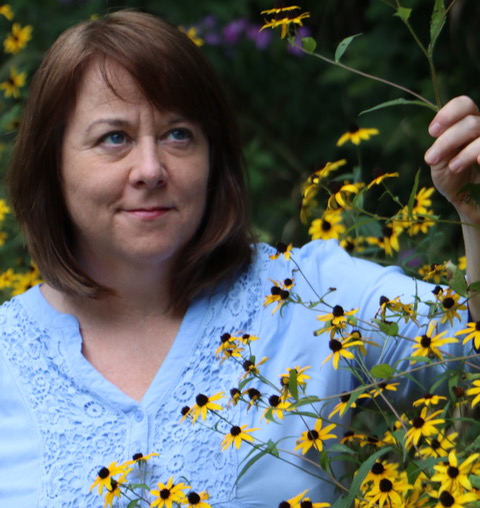
Mary Kay Carson has been writing for kids since landing a job at Scholastic’s SuperScience magazine nearly three decades ago. She’s the author of more than fifty nonfiction books for young people about nature, inventors, wildlife, history, space, and more. Her book Alexander Graham Bell for Kids received a 2019 AAAS/Subaru SB&F Prize. She’s written six titles in Houghton Mifflin Harcourt’s Scientists in the Field series, including 2019’s The Tornado Scientist. Carson also does author visits to schools and is a contributing member of STEM Tuesday and Hands-On Books. Learn more at: www.marykaycarson.com.


ABOUT THE PRIZE

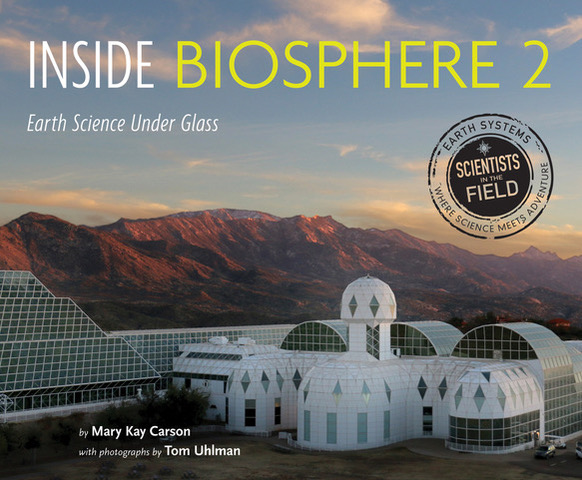
Mary Kay Carson will be awarding a signed copy of INSIDE BIOSPHERE 2: Earth Science Under Glass.


Leave one comment below about what struck you in the post.

You’re eligible to win if you’re a registered NF Fest participant and you have contributed one comment below.