Tuesday, May 2, 2023

Make Friends with a Bookstore

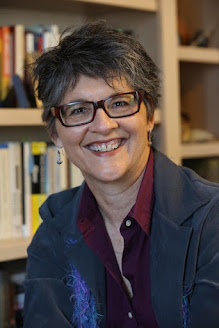
 By Nancy Churnin

Here’s something that gets forgotten on the writer’s journey – the importance of getting to


know and support folks in your local bookstore.

People get into bookselling for the same reason authors and illustrators get into creating books – THEY LOVE BOOKS.

You sit alone, crafting your story to the best of your ability, revise, revise, revise with the help of critique partners and ultimately, you hope, with an acquiring editor. But when that book comes out, the next part of the journey is to get the book into children’s hands.

Librarians and educators are key allies. And so are the people who run bookstores. If a bookstore loves your book, they’ll display it prominently and recommend it to patrons.  They may host your launch party, pitch your book to schools and, possibly, set up an arrangement where you can personalize the books people order.

So how can you build that relationship?

BOOST You think it’s a struggle making it as an author? It’s a struggle making it as a bookstore. Look for excuses to post about your local bookstore on social media.

BUY Your budget may be limited. But bookstores, especially small ones, remember every customer. Plus, there’s nothing like seeing what bookstores put on their shelves to help you understand what kind of stories and storytelling people love.

BE THERE Make regular trips to your local bookstore. While you’re there, sign your books they have in stock and see if you can help out with a storytime. On July 13, I’ll present storytimes at 11 a.m. and 2 p.m. as part of the two-year birthday celebration for Interabang Books in Dallas. I stay in close touch with friends at my local Barnes & Noble and Express Booksellers, which sells books to schools and non-profits.

And here’s the best part. I’ve met wonderful people at these bookstores – people who inspire and encourage me. These are people that believe books matter. So make friends with a bookstore and the amazing people in it. You’ll be glad you did. 

Tuesday, April 25, 2023

AUTHOR Q & A with DEB ARONSON

By Peggy Thomas


Today, we're talking to nonfiction author Deb Aronson

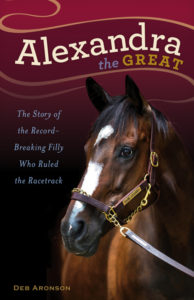
Deb lives in the Chicago area and writes lively articles for academic institutions and other nonprofits, but her true passion is sharing with children stories about ordinary people doing extraordinary things. She's the author of ALEXANDRA THE GREAT: THE STORY OF THE RECORD-BREAKING FILLY WHO RULED THE RACETRACK, which Deb describes as a "girl power" story even if the girl in question has four legs and hooves! Deb is a network representative for the Society of Children's Book Writers and Illustrators (SCBWI), and her newest nonfiction title comes out in May from Bedazzled Ink. 


Q: Hi Deb! Could you tell us about your newest book, and what sparked the idea?

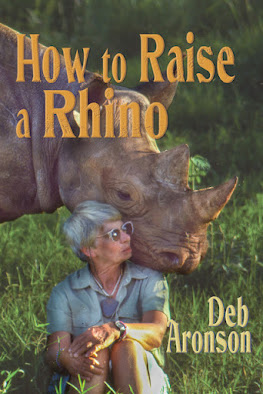
A: My newest book is titled, HOW TO RAISE A RHINO and it is a biography of a woman named Anna Merz. Anna retired from Ghana to Kenya, discovered that black rhinos were almost extinct and created a sanctuary for them. Along the way she raised an infant rhino to adulthood, which involved both hilarity and heartbreak.


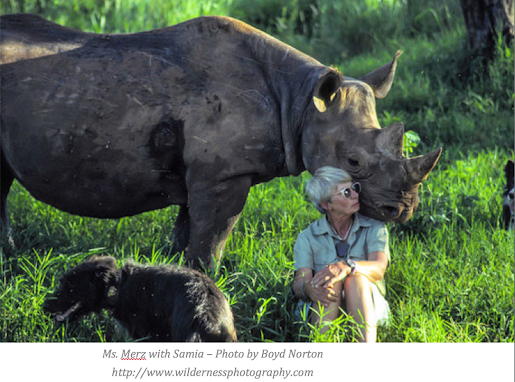
I first learned about Anna by reading her obituary (she died in 2013). It was accompanied by this photograph by Boyd Norton. Wouldn’t that catch your imagination?! I thought her story would appeal to MG readers.

Q: What was your research process like?

A: First, I googled. I read every obituary and news article I could find. Although she wasn’t “famous famous,” Anna was well known and respected and so many news outlets and web sites had stories about her. In the course of that work I found her god daughter, who she was very close to, as well as the founder of Rhino Resource Center (Kees Rookmaker), to whom she had donated all her journals. He scanned many pages and shared them with me. Anna also had written two books about her life and adventures, which I found and read. I traveled to England to meet her god daughter (Naomi Campbell but not the super model) and a couple other people who knew her. They pointed me to more people, including the American Association of Zoo Keepers (AAZK), which hosts special trips to the sanctuary for zoo keepers, and a few others. Next thing I knew, I was on a trip to Kenya, to the actual sanctuary, together with several people who had known Anna. I met more people there at the sanctuary, including both several trackers and Ian Craig, on whose land the sanctuary was established.


Q: Why did you choose to write this book for the mid-grade market?

A: The middle grade market is a catchall between picture books and YA. You have early independent readers who have conquered chapter books, as well as readers who are just about to launch into the YA world. That is a vast range of readers, and that makes it a very important phase. I was a strong reader growing up but never found biographies of ordinary people to read. It was only people like Marie Curie, whose life was hard and tragic and driven, which made her feel like an impossible role model.

To show readers at this level the kinds of lives people can make for themselves, if they have imagination and passion, is what gets me out of bed in the morning.


Q: What is the most difficult part of the writing process for you, and how do you get through it?

A: The hardest part for me is logistical — keeping track of all the pieces and parts of my research and of my drafts and worrying that I’ve lost track of some critical piece of information. I’ve tried apps like Evernote but I have yet to figure out a really good systematic way that prevents me from often throwing up my hands at the disarray, especially because I have learned I do best with old-fashioned pen and paper systems. I have come to accept that the only way around this struggle is through. In addition, my beloved critique group friends helped keep me going, as did putting the manuscript away for a while.


Q: What did this project teach you about yourself or your writing process?

A: Well, I never thought about this, but looking back I think I’ve discovered that I am more persistent than I’ve given myself credit for. This book idea was born in 2013, when Anna died. It took about four years to research and write it. Then I found an agent and she had it for about two years. Despite one close call she found no buyers. We parted ways, I went back to trying to sell it. I often wanted to give up, but instead I made a spreadsheet of potential agents and publishers, realized I hadn’t reached out to as many as I thought and kept going. I also want to mention here that I wouldn’t have gotten this far without my critique partners.


Q: What are you working on next?

A: I have an almost complete biography of African-American lawyer, civil rights activist, poet and Episcopalian priest, Pauli Murray. This has been a real act of love for me because I have several personal, though somewhat loose, connections to Dr. Murray, who has been recognized, among other things, as an early transgender advocate.

Thanks Deb!

Check out Deb Aronson's website, and follow her on Twitter Facebook, and Instagram.


Tuesday, April 18, 2023

Kids Connect to Kids

By Linda Skeers 

Tackling a picture book biography can be daunting! You’ve done your research, read books


and articles, taken notes and have stacks of facts. Sometimes too many facts. Way too many! How can you sum up a person’s life for a child?

       One way is to narrow your focus on just one aspect of their life – their childhood. Children love to know what people were like when they were their age. It makes an instant connection between your subject and your reader.   

       As you research, look for anecdotes, stories and incidents from your subject’s childhood.
Keep these questions in mind --What inspired their future endeavors? Was their skill, talent or aptitude apparent in their early years? Did they have a defining moment that led them down a particular path? Was their future success or achievement hinted at years before they discovered their life’s purpose?

     Here are a few outstanding mentor texts that focus on a person’s childhood:

Preaching to the Chickens: The Story of Young John Lewis by Jabari Asim
     An inspirational story highlighting Civil Rights leader John Lewis’s desire to encourage people to think, feel and act. But who can he practice his empowering speeches on when he’s just a young farm boy?
     The flock of chickens he’s tending!

Words Set Me Free: The Story of Young Frederick Douglas by Lesa Cline-Ransom
     As a child, Frederick Douglas dreamed of a future where everyone was treated equal. He knew he had to do one important thing before that could happen – learn to read. No matter how difficult or how many obstacles he faced, he knew he MUST succeed.

Me…Jane by Patrick McDonnell
       Almost all children have a favorite stuffed animal. So did Jane Goodall. She adored her stuffed chimpanzee which led her to a life devoted to studying, living among and helping animals.

Before He Was a Jazz Giant: A Song of John Coltrane by Carole Boston Weatherford
       John Coltrane LOVED all the sounds of his childhood. And what he heard as a young boy helped shape his amazing musical career.

       Dig deep and search for those special childhood moments in a person’s life that have shaped their future. Having a child read about someone’s younger days and CONNECT to them is an amazing accomplishment. Imagine them closing a biography and thinking, “Hey, they are just like me!” or “I’ve done that, too” or “I know how that feels.”

     Not only will your reader gain a deeper understanding into someone else’s life, they will believe that they too, can do amazing things in their life.
           
     Because after all, we all started out as kids.

Tuesday, April 11, 2023

Who's There?

 by Christine Liu-Perkins


​Powerful nonfiction draws readers in by exploring some aspect of being human. As Susan

Rabiner & Alfred Fortunato wrote, ". . . you find your narrative by humanizing your story" (
Thinking Like Your Editor, p. 192).
 
Even in writing about science and nature, "Create a connection between your subject and your reader's life," advised Margery Facklam and Peggy Thomas (Anatomy of Nonfiction, p. 155).
 
I learned the value of building on a human connection when I was assigned to write about the Temple of Heaven located in Beijing. My first draft described the temple's architecture and its (very cool) hidden symbolism. I used lively language and a sense of progression. I included wow-type details. Surely readers would find the temple as awesome as I did.
 
But in reading it over, I sensed that draft still lacked something. It was dry; it was boring. What was missing?  
 
I pulled back and started wondering, WHO used the temple? What did they use it for?
 
I dug deeper into the research. The answer was emperors. Considered to be mediators between heaven and earth, the emperors themselves performed ceremonies at the Temple of Heaven. These ceremonies involved three days of fasting and mental preparation, a parade of some 3,500 people, and elaborate sequences of offerings and prayers.
 
Eureka! Here was the focus I needed to help readers connect to the temple. Describing the emperor's actions and his desire for heaven's blessings brought the article to life and gave readers a way to feel the significance of the temple.
 
Question for you: in your current project, can you amplify a human connection to deepen the reader's experience?

Christin Liu-Perkins writes both nonfiction and fiction. You can learn more about her work at https://christineliuperkins.com/


Tuesday, April 4, 2023

Try Nonfiction lite!

 By Peggy Thomas


For anyone who is leery of leaping into nonfiction writing, I’d like to suggest Nonfiction-lite. Adding a nonfiction element to your fictional project. One way is by adding nonfiction back matter. This works especially well if there is an historic or scientific element to your story.


For example, in 
How Fire Ants Got Their Fire, a fictional origin story, fellow ninja Susan
Kralovansky added a recipe for the main character’s “prizewinnin’ chili.” But what I like most is the creative way that she included facts about fire ants on the end pages. Each fact is displayed on a chili pepper.


My good friend Kathleen Blasi’s sweet story called Milo’s Moonlight Mission follows the

main character, Milo, as he helps his mother do all of her chores so she can accompany Captain Milo on his space launch. But when they hear about a meteor storm, they prepare for a new mission. Based on a real experience, Kathy added back matter that explains what a comet is and when to watch the Leonid Meteor shower each year. There is even a call to action as she asks readers if they will set their alarm to watch the next one.


One more example comes from fellow Ninja Lisa Amstutz. Her picture book

called, 
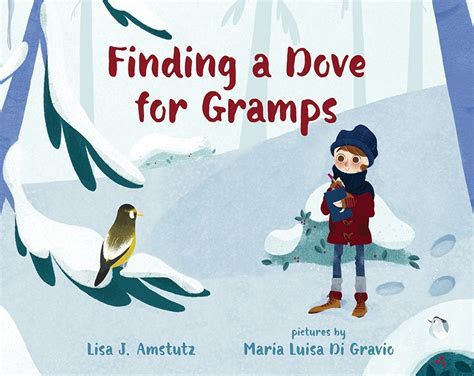
Finding a Dove for Gramps, follows a boy and his mother as they participate in the Christmas Bird Count. Tension rises when the one bird they most hope to find proves elusive. In the back matter Lisa added a short description of the Bird Count, how to join, and most fun of all, a checklist of birds so readers can join in the hunt.
Adding nonfiction back matter to a fictional story adds educational value that librarians and teachers love, and added sales value that editors appreciate.

So, what kind of back matter could you add to your writing project? A recipe, craft, game, fun facts, background info, call to action…?

Leap in! Nonfiction is fun!

Peggy Thomas is the author of dozens of award-winning nonfiction titles including Lincoln Clears a Path.


Tuesday, March 28, 2023

Announcing the Nonfiction Writing Contest


The Nonfiction Ninjas are excited to announce our first-ever Nonfiction Writing Contest! After spending the month of February learning from the Nonfiction Fest, it’s time to put your knowledge to work. Show us what you’ve got!


This year’s contest will be for nonfiction picture books. Six winners will receive a FREE three-month mentorship with one of the Ninjas. One grand prize winner will move to the head of the slush pile with Storm Literary Agent Lisa Amstutz! All winners will receive written feedback on their manuscripts. Mentorship winners will decide with their mentors whether they want to work on perfecting a project or develop something new.


So how do you get in on this merriment? First, get busy writing! You have 4 ½ months to write a manuscript that knocks our socks off. This will be a NONFICTION Picture Book of no more than 1,000 words, typed in SCBWI Standard Manuscript Format. Send us a cover letter that includes your contact information and a brief bio. The manuscript should be attached as a word.doc. This contest does NOT include informational fiction. The submission window is July 15th – August 1st, 2023. Send your entry to NFNinjaWriters@gmail.com


Now for the fine print! Everyone wanting to enter the contest must subscribe to our blog. You can subscribe here. AND – Be sure to follow each of the ninjas on social media. We will be tweeting helpful hints about the contest under the hashtag #NinjaWritingContest. Plus – it’s a way to thank us for hosting the contest and NFFest. We don’t ask for money, but we do ask for your support by following us on social media and supporting our books.

Here are our Twitter handles. 

@LJAmstutz

@StephanieBearce

@nchurnin

@SusanKralovansk


@skeerswriter


@Pegtwrite


These are our FB Author Pages

Lisa Amstutz Author

Stephanie Bearce

Nancy Churnin Children’s Books

Susie Kralovansky

Linda Skeers

Peggy Thomas


Sleuthing out the Truth

By Nancy Churnin 


A nonfiction writer needs the skills of a super sleuth.  So, put on your Sherlock Holmes cap, and track down your subject. If your subject is dead, contact that person’s descendants or those who knew the person well.


What you learn can make the difference in unearthing details that will bring your story to vivid life or correct errors made in previous biographies.
 
How do you find these people?
 
Newspapers and magazine articles. If the person is alive, articles will probably tell you where that person was living as well as where the person was working at the time the article was written. Look up the place of work and if your subject is no longer working there, ask where the subject might be. If dead, obituaries will tell you the survivors or where the person donated records. Your subject’s alma mater can help track down heirs.
 
Universities and publishers. If the person and heirs are impossible to reach, look up experts on your subject. Often that person can be found teaching at a university where emails are easy to find. The expert may also point you to resources that can get you going on your own original research.
 
Travel. If you can, go to the actual place where your subject lives or lived and walk the streets that person walked, go to places that person might have frequented and talk to people who know or knew your subject.
 
What if the subject or the family WON’T support the book?

​While it’s your legal right to write about people who are famous without their consent, I have always opted against that. It is hard to get a story right even with all the resources at your disposal. It’s also hard to market the best of stories. It’s a big help to go out there with support.
 
If your hunt leads to putting your manuscript aside, remember that even for the best of detectives, not all cases get solved. But with these tips, the percentage that you do solve should go up. Happy sleuthing!